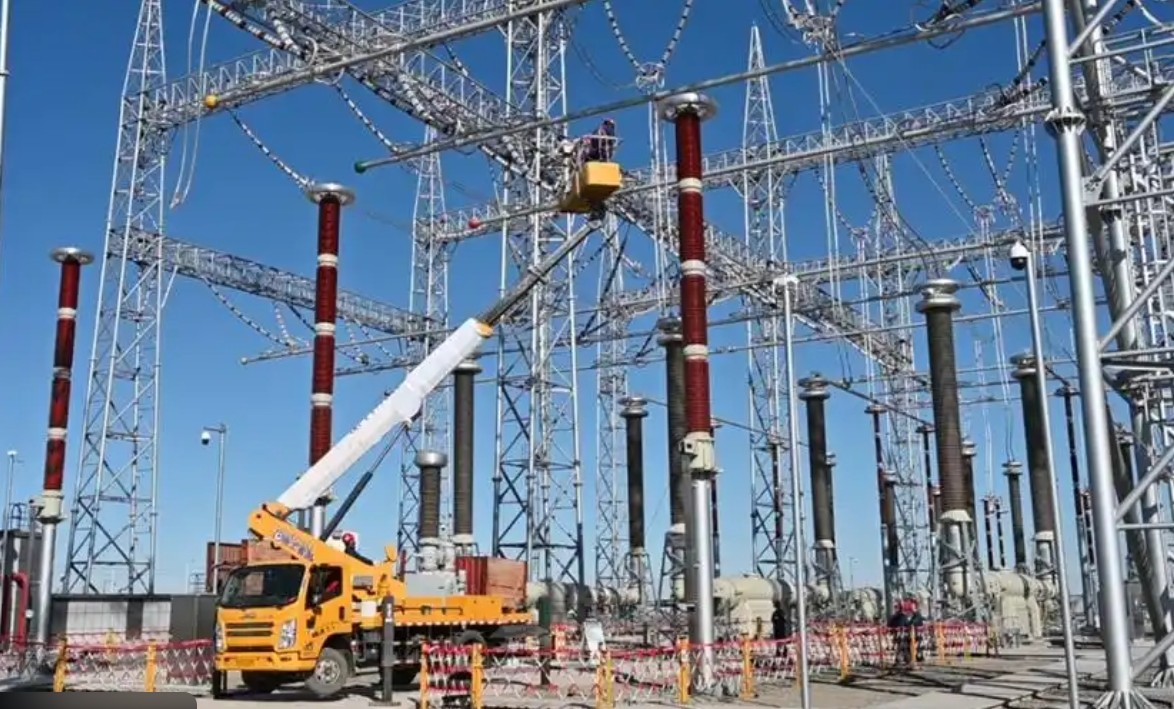
Substation Primary Equipment and Yard Hardware
Substation Primary Equipment and Yard Hardware Supply and Sourcing for Transmission Expansion, Substation Upgrades, and Urgent Grid Replacement Programs
Executive Overview
Substation primary equipment and yard hardware form the foundation of high voltage transmission and distribution substations. This category includes current transformers, potential transformers, capacitor voltage transformers, disconnect switches, surge arresters, insulators, station service transformers, and substation battery systems.
These assets support measurement, protection, isolation, voltage transformation, and control power continuity inside transmission and distribution yards. They are present in utility transmission substations, generation interconnection yards, renewable collector substations, HVDC terminals, industrial substations, and large data center interconnect facilities.
In procurement terms, these components are not optional accessories. They are protection-critical and energization-critical. A single missing current transformer or delayed disconnect switch can prevent line energization, transformer commissioning, or breaker close-in. Supply timing directly affects outage windows, interconnection schedules, and grid reliability metrics.
This page is written for procurement teams, engineers, operations managers, asset managers, and EPC electrical contractors who are responsible for specification review, lead time management, commissioning, and long-term replacement planning.
Services:
Industry Context and Real World Constraints
Substation yard equipment is currently influenced by the same pressures affecting the broader power industry.
Grid expansion programs are increasing demand for instrument transformers and disconnect switches. Data center interconnection projects are adding new 115 kV, 230 kV, and 345 kV substations at accelerated timelines. Renewable integration is driving new collector stations and breaker-and-a-half configurations. At the same time, transformer lead time and long lead electrical equipment constraints are affecting substation schedules as a whole.
Instrument transformers and surge arresters may not have the same multi-year lead times as large power transformers, but they still face raw material constraints, porcelain production bottlenecks, and testing capacity limits. Specialized ratings such as high accuracy metering CTs or extra high voltage CVTs can extend equipment lead times in the power industry beyond what project teams initially forecast.
Commissioning pressures add another layer of risk. Protection panels, relay settings, and SCADA systems depend on accurate CT and PT ratios. Late specification changes or ratio mismatches can delay energization. Emergency replacement programs following failure events often require rapid sourcing from the secondary market, especially for disconnect switches and arresters at legacy voltage classes.
Secondary market dynamics are uneven. Some yard hardware such as disconnect switches and insulators may be available from decommissioned substations. High accuracy metering class CTs and modern battery systems are less likely to be available without specification compromise.
Technical Breakdown by Subcategory
Current Transformers CTs
Current transformers step down primary current to standardized secondary values for protection relays and metering systems.
They are installed on line terminals, transformer bushings, breaker bushings, and bus structures across voltage classes. Engineering considerations include ratio selection, burden, accuracy class, thermal rating factor, short circuit withstand, and insulation level.
Specification alignment issues often arise around relay upgrade projects. Changing protection schemes may require different accuracy classes or multiple cores. Procurement risks include long factory testing queues for high voltage oil-filled CTs and delays in bushing style compatibility for retrofit applications.
Operational failure risks include insulation breakdown, secondary open circuit conditions, and ratio misapplication. Replacement challenges are significant in live yards due to clearance, outage coordination, and bus configuration constraints.
Potential Transformers PTs
Potential transformers provide stepped-down voltage signals for metering and protection.
They are commonly used in distribution and lower transmission classes and may be installed as single phase or three phase units. Key engineering factors include voltage ratio, burden, accuracy, insulation class, and ferroresonance mitigation.
Procurement risks involve compatibility with existing relay schemes and mounting arrangements. Operational risks include fuse failures, insulation degradation, and ferroresonance events in lightly loaded systems.
Replacement challenges typically involve bus outage coordination and physical footprint constraints within existing steel structures.
Capacitor Voltage Transformers CVTs
CVTs are used in high voltage transmission systems for voltage measurement and carrier coupling applications.
They are common in 115 kV and above installations. Engineering considerations include capacitance stack design, accuracy class, transient response, and compatibility with line protection schemes.
Specification alignment is critical for line differential and distance protection applications. CVT transient performance can influence relay behavior. Procurement risks include extended testing times and shipping constraints for tall porcelain units.
Operational failure risks include oil leaks, capacitor stack degradation, and carrier coupling component failure. Replacement often requires crane access and extended outage windows.
Disconnect Switches
Disconnect switches provide visible isolation in substations. They are not load break devices unless specifically rated.
They are used on line bays, transformer bays, bus tie sections, and transfer schemes. Engineering considerations include voltage class, BIL rating, continuous current rating, short circuit withstand, blade configuration, motor operator integration, and interlocking requirements.
Procurement risks include long fabrication cycles for higher voltage classes and motor operator lead times. Retrofit projects often encounter foundation misalignment and structure compatibility issues.
Operational risks include contact wear, misalignment, motor operator failure, and improper interlocking. Replacement challenges are driven by outage coordination and structural modification requirements.
Surge Arresters
Surge arresters protect substation equipment from overvoltage events caused by lightning or switching surges.
They are installed at line entrances, transformer terminals, and bus sections. Engineering considerations include MCOV rating, energy handling capability, discharge class, housing type, and pollution level performance.
Procurement risks include incorrect MCOV selection and compatibility with existing insulation coordination studies. Operational failure risks include moisture ingress, thermal runaway, and aging under contaminated environments.
Replacement programs must account for grounding system integrity and mounting hardware condition.
Insulators
Insulators provide mechanical support and electrical isolation for bus, equipment terminals, and structural connections.
They are present in all yard configurations. Engineering considerations include creepage distance, mechanical strength, pollution performance, and compatibility with hardware fittings.
Procurement risks are often underestimated. Matching legacy hardware interfaces and bolt patterns can be complex. Operational risks include contamination flashover, mechanical cracking, and vandalism damage.
Replacement challenges are driven by access constraints and the need to maintain minimum approach distances during staged upgrades.
Station Service Transformers
Station service transformers provide low voltage power for lighting, control systems, battery chargers, HVAC, and auxiliary loads.
They are typically supplied from the high voltage bus or a dedicated feeder. Engineering considerations include kVA rating, impedance, grounding method, short circuit duty, and environmental enclosure rating.
Procurement risks include underestimating auxiliary load growth in modern digital substations. Operational risks include overheating due to load creep and improper grounding.
Replacement may require temporary power arrangements to maintain control power continuity.
Battery Systems
Substation battery systems provide DC control power for breaker trip and close circuits, protection relays, and communication systems.
Common configurations include lead acid and increasingly lithium based systems. Engineering considerations include voltage rating, amp hour capacity, duty cycle, charger compatibility, ventilation, and seismic requirements.
Procurement risks include supply constraints on large battery banks and charger systems. Operational risks include capacity degradation, improper maintenance, charger failure, and thermal events in poorly ventilated rooms.
Replacement challenges are sensitive because battery cutover affects protection reliability and breaker operation.
System Integration and Dependencies
Substation primary equipment and yard hardware are tightly integrated with protection systems, control systems, and power system operation.
CTs and PTs feed protective relays and metering. CVTs may integrate with teleprotection and carrier systems. Disconnect switches interact with interlocking logic and SCADA position indication. Arresters depend on effective grounding and insulation coordination studies. Battery systems support relay panels, RTUs, and breaker mechanisms.
Cooling systems are generally not required for most yard hardware, but environmental conditions such as contamination, altitude, temperature extremes, and seismic zone classification directly affect equipment selection.
Compliance and safety considerations include IEEE and IEC standards, NERC reliability requirements where applicable, and utility specific material specifications.
Lifecycle Perspective
Lifecycle management begins at specification.
Specification must align with system studies, relay schemes, insulation coordination, and grounding design. Sourcing must consider equipment lead times in the power industry and potential supply constraints.
Procurement requires detailed review of drawings, factory acceptance test procedures, nameplate data, and compliance documentation. Factory testing for instrument transformers and arresters must be documented and archived.
Delivery logistics must account for fragility of porcelain components and coordination with site readiness. Installation requires torque verification, grounding continuity checks, and alignment validation.
Commissioning includes ratio verification for CTs and PTs, polarity checks, relay injection testing, motor operator functional tests, and battery discharge testing.
Maintenance programs include infrared inspections, contact resistance testing, battery impedance testing, visual porcelain inspection, and periodic insulation resistance measurements.
Replacement planning must consider aging infrastructure risks, obsolete ratio classes, and compatibility with modern digital relays. Secondary market redeployment may be viable for disconnect switches, insulators, and certain station service transformers where condition and documentation are verified.
Procurement Strategy and Risk Mitigation
Effective procurement strategy starts with accurate forecasting and early engagement with manufacturers.
Lead time forecasting must account for testing queues and raw material constraints. Spec validation should include cross review between protection engineering and physical design teams to avoid ratio and burden mismatches.
Interoperability must be confirmed with existing relay schemes and SCADA systems. Testing documentation must be contractually required and reviewed before shipment.
Risk reduction measures include alternate approved vendors, prequalified secondary market sourcing for non protection critical hardware, and maintaining a strategic spare inventory for high failure rate components.
Redeployment options should be evaluated during decommissioning of substations to capture usable disconnect switches and yard hardware for future projects.
Operational Risks and Failure Modes
Common mis specifications include incorrect CT accuracy class for protection schemes, improper arrester MCOV selection, and under rated station service transformer capacity.
Installation errors often involve improper grounding of arresters, incorrect CT secondary termination, and misaligned disconnect switch blades.
Maintenance gaps include neglected battery capacity testing, lack of periodic contact resistance testing on disconnect switches, and failure to clean insulators in high contamination zones.
Aging infrastructure risks include porcelain cracking, oil insulation degradation in instrument transformers, and corrosion of structural hardware.
Commissioning delays frequently result from ratio mismatches discovered during relay testing or incomplete factory documentation.
Integration mismatches occur when yard hardware is replaced without verifying compatibility with existing control and protection systems.
Who This Page Is For
This authority page supports:
Utilities planning substation expansion and modernization
Transmission operators managing reliability metrics
Independent power producers building new interconnection yards
Data center developers constructing high capacity substations
Industrial facilities upgrading primary substations
EPC contractors responsible for turnkey electrical construction
Procurement teams managing equipment lead times and risk
Asset managers overseeing lifecycle and replacement planning
Professional Call to Action
Substation primary equipment and yard hardware require specification discipline, supply chain awareness, and lifecycle planning.
Jaylan Solutions
www.jaylansolutions.com
Supports utilities, EPC contractors, and asset owners as a supply partner, specification aligned sourcing advisor, secondary market strategist, and long lead mitigation resource for substation infrastructure projects.
Keywords:
substation primary equipment
substation yard equipment
current transformer CT
potential transformer PT
capacitor voltage transformer CVT
high voltage disconnect switch
substation surge arrester
station class arresters
substation insulators
station service transformer
substation battery system
instrument transformer supply
high voltage yard hardware
substation equipment lead times
emergency substation equipment replacement
power industry equipment lead times
substation upgrade equipment supply
transmission substation components
