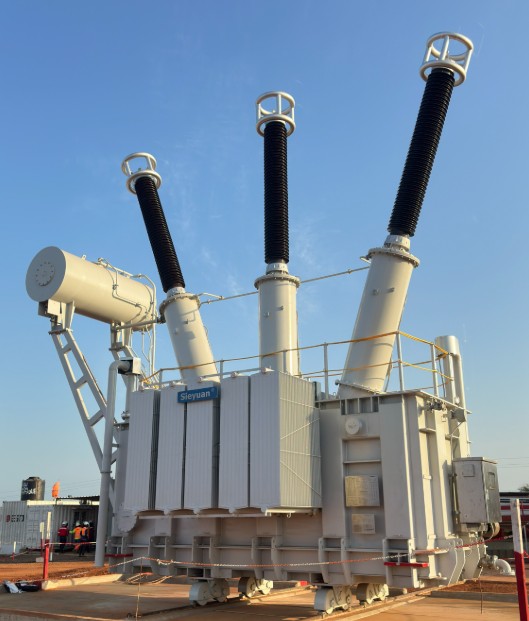
Reactive Power Equipment
Reactive Power Equipment Supply and Sourcing for Grid Modernization, Industrial Power Systems, and Urgent Replacement Programs
Executive Overview
Reactive power equipment includes capacitor banks, reactors, harmonic filters, and associated switching equipment used to control voltage, improve power factor, manage harmonics, and stabilize electrical systems. These systems are installed across transmission networks, substations, industrial plants, renewable interconnections, and large commercial loads.
Reactive power management is not optional in modern grids. Voltage stability, system losses, transformer loading, and equipment lifespan are directly affected by how reactive power is produced and absorbed. In high-demand environments such as data centers, electrified manufacturing, and renewable-heavy transmission corridors, improper reactive compensation leads to overheating, nuisance tripping, harmonic distortion, and premature failure.
Supply timing matters. Long lead electrical equipment, including medium and high voltage capacitor banks and reactors, often face extended manufacturing cycles. Projects tied to interconnection agreements, plant expansions, or emergency replacement programs cannot tolerate procurement delays. Equipment lead times in the power industry are now a primary planning variable, not a secondary concern.
This page is written for procurement teams, electrical engineers, asset managers, EPC contractors, and operations personnel who require specification-aligned sourcing and real-world integration guidance.
Services:
Industry Context and Real-World Constraints
Reactive power equipment demand has increased due to:
Grid modernization and voltage stability mandates
Renewable generation variability
Electrification of heavy industry
Data center expansion with high harmonic loads
Stricter power quality compliance requirements
Transmission operators are balancing longer interconnection queues with aging substation infrastructure. Utilities are replacing legacy fixed banks with switched and automated solutions. Industrial facilities are upgrading to meet harmonic distortion limits under IEEE 519.
Current constraints include:
Extended lead times for medium and high voltage capacitor banks
Custom reactor winding delays due to core material allocation
Specialized harmonic filter engineering requirements
Protection relay compatibility challenges
Limited availability of switching devices rated for high inrush duty
Switchgear supply shortages and transformer lead time extensions also affect reactive power project sequencing. Capacitor banks cannot be energized without compatible protection, switching coordination, and available feeder capacity.
Secondary market dynamics have shifted. Surplus equipment must be validated against updated harmonic profiles and fault current levels. Redeployment without system studies introduces operational risk.
Urgency-driven procurement is common in scenarios involving:
Failed capacitor bank stages
Harmonic distortion exceeding compliance limits
Voltage instability after load growth
Renewable interconnection commissioning delays
Substation expansion schedules tied to grid reinforcement
Technical Breakdown by Subcategory
Capacitor Banks
What They Are
Capacitor banks provide reactive power injection to correct power factor, improve voltage stability, and reduce system losses. They may be fixed, automatically switched, or part of staged bank assemblies.
Where They Are Used
Transmission substations
Distribution feeders
Industrial motor loads
Data centers
Renewable interconnections
Engineering Considerations
Voltage class and insulation coordination
Short circuit duty rating
Harmonic amplification risk
Inrush current control
Switching transients
Specification Alignment Issues
Incorrect kvar sizing or failure to account for harmonic content leads to overheating and premature dielectric failure. Improper coordination with protective relays can cause nuisance trips.
Procurement Risks
Custom enclosure configurations and integrated switching assemblies increase fabrication lead times. Reactive power equipment supply shortages can impact substation energization schedules.
Operational Failure Risks
Blown capacitor units
Unbalanced phases
Overvoltage conditions
Thermal stress in high harmonic environments
Replacement Challenges
Matching legacy mounting dimensions and control schemes often complicates emergency generator procurement timelines when facilities operate on backup power and require stable voltage support.
Reactors
What They Are
Reactors absorb reactive power and limit fault current or harmonic resonance. They may be shunt reactors, series reactors, or detuning reactors used with capacitor banks.
Where They Are Used
Transmission lines for voltage control
Industrial facilities with fluctuating loads
Harmonic filter systems
Capacitor bank detuning applications
Engineering Considerations
Core versus air-core design
Thermal management
Saturation characteristics
System impedance matching
Mechanical support under fault conditions
Specification Alignment Issues
Incorrect reactance selection can create resonance conditions. Inadequate thermal design reduces lifespan under continuous load.
Procurement Risks
Copper and core material availability affects production schedules. Custom winding designs increase lead times.
Operational Failure Risks
Overheating
Insulation breakdown
Mechanical vibration damage
Increased system losses
Replacement Challenges
Physical footprint and bus alignment in existing substations often restrict rapid replacement options.
Harmonic Filters
What They Are
Harmonic filters combine capacitors, reactors, and resistive elements to mitigate harmonic distortion caused by nonlinear loads.
Where They Are Used
Data centers
Steel mills
Mining operations
Variable frequency drive installations
Renewable inverter systems
Engineering Considerations
Harmonic spectrum analysis
Tuning frequency
System impedance
Protection coordination
Thermal loading
Specification Alignment Issues
Filters must match the actual harmonic profile, not assumed load data. Misalignment leads to ineffective filtering or overload.
Procurement Risks
Filters are engineered systems requiring study data. Delays in load data or design approval extend schedules.
Operational Failure Risks
Component overheating
Resonance amplification
Nuisance protection trips
Compliance violations
Replacement Challenges
Retrofitting filters into constrained switchgear rooms requires spatial and thermal reassessment.
Switching Equipment
What It Is
Switching equipment includes vacuum switches, contactors, breakers, and control assemblies used to energize and de-energize reactive power components.
Where It Is Used
Substations
Industrial motor control centers
Power factor correction panels
Automatic capacitor bank systems
Engineering Considerations
Inrush duty rating
Re-strike control
Protection relay compatibility
Arc flash mitigation
Specification Alignment Issues
Standard breakers may not be rated for capacitor switching duty. Incorrect selection reduces equipment life.
Procurement Risks
Switchgear supply shortages and long lead electrical equipment constraints often delay reactive power installations.
Operational Failure Risks
Contact welding
Vacuum interrupter wear
Control logic malfunction
Switching transient damage
Replacement Challenges
Compatibility with legacy control schemes and panel layouts frequently complicates emergency replacement.
System Integration and Dependencies
Reactive power equipment interacts directly with:
Power transformers and bus systems
Protective relays and SCADA controls
Voltage regulation schemes
Cooling and ventilation systems
Grounding and bonding networks
Harmonic filters must be integrated with system impedance studies. Capacitor banks must align with protection settings and feeder fault levels. Reactor installations must consider structural support and thermal dissipation.
Environmental conditions such as high ambient temperature, dust, coastal corrosion, and altitude affect equipment selection and insulation class.
Compliance requirements include IEEE standards, local utility interconnection criteria, and regional reliability mandates.
Lifecycle Perspective
Reactive power equipment lifecycle includes:
System studies and specification development
Vendor prequalification
Procurement planning based on equipment lead times power industry
Factory testing and inspection
Shipping coordination
On-site installation
Commissioning and protection setting validation
Ongoing inspection and thermal monitoring
Stage replacement and component retrofits
Secondary market redeployment when system conditions permit
Long lead electrical equipment planning must consider staged capacitor deliveries, reactor fabrication timelines, and switching assembly integration.
Documentation requirements include:
Test reports
Insulation resistance results
Harmonic analysis validation
Protection coordination studies
Installation drawings
Improper lifecycle planning leads to commissioning delays and voltage instability.
Procurement Strategy and Risk Mitigation
Effective procurement requires:
Early load flow and harmonic studies
Verification of fault duty ratings
Cross-checking protection settings
Reviewing manufacturer production capacity
Identifying alternate sourcing pathways
Evaluating secondary market assets only after technical validation
Secondary market sourcing is viable when:
Voltage class matches
Insulation condition is verified
Harmonic duty aligns
Switching components meet inrush ratings
Redeployment options must be supported by engineering review.
EPC electrical procurement teams should integrate reactive power equipment into overall substation procurement strategy to avoid schedule conflicts with transformer and switchgear deliveries.
Operational Risks and Failure Modes
Common issues include:
Undersized capacitor banks
Harmonic amplification due to system changes
Incorrect detuning reactor selection
Overheated filter components
Protection miscoordination
Inadequate ventilation
Improper grounding
Aging infrastructure increases dielectric stress and failure probability. Commissioning delays often arise from incomplete protection coordination or unexpected harmonic interaction.
Integration mismatches between new reactive equipment and legacy control systems frequently create startup challenges.
Who This Page Is For
This authority page is written for:
Utilities and transmission operators
Independent power producers
Data center developers
Heavy industrial facilities
EPC contractors
Procurement teams managing substation and plant upgrades
Asset managers planning voltage support upgrades
It supports both new project development and urgent replacement programs.
Professional Call to Action
Organizations managing voltage stability, harmonic compliance, and power factor correction projects require supply alignment and technical validation.
Jaylan Solutions
www.jaylansolutions.com
Supports reactive power equipment sourcing, specification-aligned procurement, secondary market evaluation, and long-lead mitigation planning for utilities, industrial facilities, and EPC contractors.
Keywords:
Reactive power equipment
Capacitor banks
Medium voltage capacitor bank
High voltage capacitor bank
Power factor correction capacitor bank
Shunt reactor
Series reactor
Air core reactor
Detuning reactor
Harmonic filter
Industrial harmonic filter system
Capacitor bank switching equipment
Capacitor switching vacuum breaker
Reactive power compensation system
Substation capacitor bank supply
Reactor supply power industry
Harmonic mitigation equipment
Reactive power equipment lead time
Long lead electrical equipment
Equipment lead times power industry
Switchgear supply shortage
Voltage stability equipment
