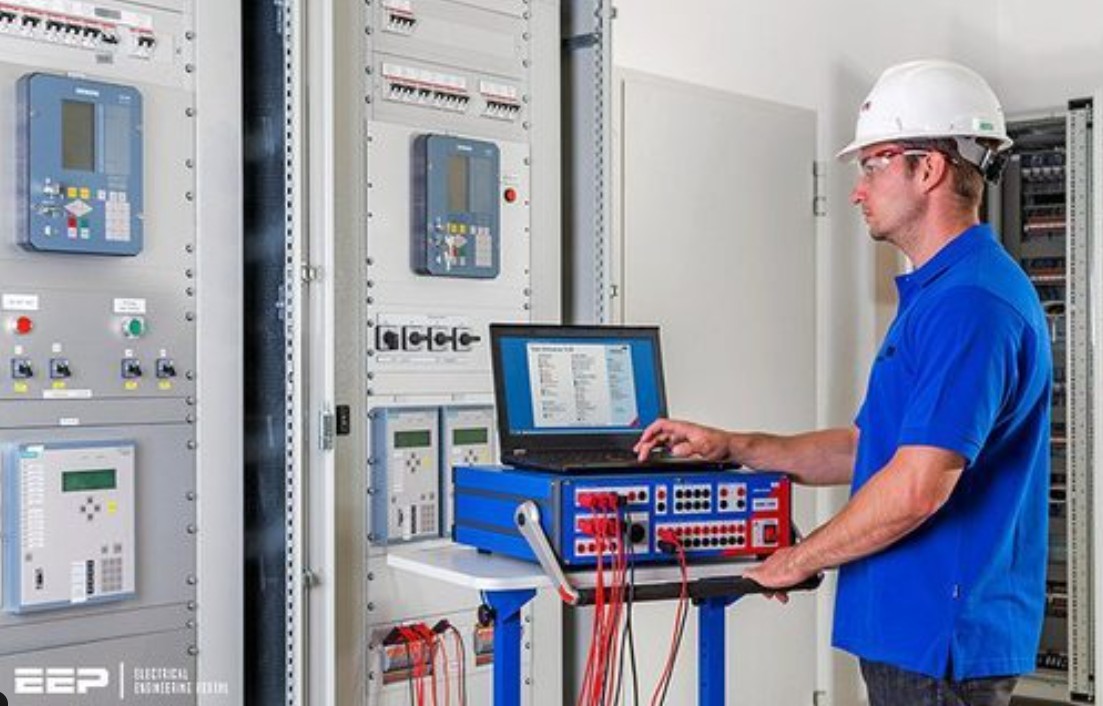
Protection, Control & Automation Systems
Protection, Control & Automation Systems for Transmission and Generation Infrastructure
Executive Overview
Protection, control, and automation systems form the operational backbone of modern transmission and generation infrastructure. This category includes protective relays, substation automation systems, remote terminal units, SCADA platforms, teleprotection systems, phasor measurement units, and time synchronization infrastructure.
These systems detect faults, isolate disturbances, manage switching operations, coordinate grid stability, and provide visibility into real-time network conditions. Without properly specified and integrated protection and control systems, high-voltage assets such as transformers, breakers, generators, and transmission lines cannot operate safely or reliably.
They are deployed across transmission substations, generation plants, renewable interconnections, industrial facilities, and large data center campuses. They are central to grid modernization, renewable integration, and capacity expansion.
Supply timing matters because commissioning cannot proceed without protection logic validation, control wiring completion, and communication integration. A delay in protective relays or RTUs can stall energization even if all primary equipment is installed. Long lead electrical equipment constraints increasingly include digital protection hardware, communication modules, and time synchronization devices.
This page addresses procurement teams, protection engineers, EPC contractors, operations personnel, and asset managers responsible for specification, sourcing, installation, and lifecycle planning.
Services:
Industry Context and Real-World Constraints
Supply Chain Realities
Protection relays and automation hardware have experienced extended lead times due to semiconductor constraints, increased grid hardening programs, and accelerated renewable interconnections. Equipment lead times in the power industry now affect not only transformers and breakers but also IEDs, communication cards, and GPS time sources.
Switchgear supply shortages frequently cascade into protection redesigns when original schemes cannot be implemented as planned. Relay substitutions often require engineering revision, panel rework, and revalidation of settings.
Commissioning Pressure
Grid expansion and data center builds have compressed commissioning schedules. SCADA and SAS integration often become the critical path because:
• Protection settings must be validated
• Communications must be verified
• Time synchronization must be confirmed
• Teleprotection channels must pass end-to-end testing
Urgent replacement programs driven by aging infrastructure add additional pressure. When a relay fails in service, emergency procurement must align with existing schemes, firmware compatibility, and communication protocols.
Grid Modernization and Interconnection
Increased renewable penetration and grid congestion require more granular monitoring. PMUs and high-accuracy time synchronization are now common in transmission systems for oscillation monitoring and wide-area stability analysis.
Interconnection complexity has increased specification scrutiny. Utilities require strict compliance with relay performance standards, cybersecurity requirements, and protocol compatibility.
Secondary Market Dynamics
Secondary market sourcing for relays, RTUs, and communication modules has become a risk mitigation tool. However, firmware versions, configuration files, and hardware revisions must be validated carefully. A mismatched relay hardware revision can prevent seamless integration into existing protection schemes.
Technical Breakdown by Subcategory
Relays
What they are
Protective relays are intelligent electronic devices that detect abnormal system conditions such as overcurrent, differential imbalance, distance faults, frequency deviations, and voltage excursions. They initiate breaker trips to isolate faults.
Where they are used
Transmission substations, distribution substations, generator protection panels, motor protection centers, and industrial power systems.
Engineering considerations
• CT and PT ratios
• Protection scheme coordination
• Differential zone definition
• Communication-assisted tripping logic
• Firmware compatibility
• Cybersecurity compliance
Specification alignment issues
Substituting relay models often requires reengineering logic diagrams and testing procedures. Settings groups and communication protocol support must align with existing infrastructure.
Procurement risks
• Extended lead times
• Limited availability of specific hardware revisions
• Discontinued models
• Communication card shortages
Operational failure risks
• Mis-coordination leading to nuisance trips
• Failure to trip during fault
• Configuration corruption
• Time synchronization errors affecting event records
Replacement challenges
Replacement in energized substations requires outage coordination and retesting. Differences in form factor can require panel modification.
Substation Automation Systems (SAS)
What they are
Integrated systems that coordinate protection, control, monitoring, and communication within a substation environment.
Where they are used
Transmission and large distribution substations.
Engineering considerations
• IEC 61850 architecture
• Network redundancy
• GOOSE messaging
• Cybersecurity zoning
• Control logic integration
Specification alignment issues
Interoperability between vendors must be validated. Network architecture must support protection traffic without latency risk.
Procurement risks
• Engineering labor availability
• Software licensing dependencies
• Communication switch lead times
Operational failure risks
• Network misconfiguration
• Cyber intrusion exposure
• Loss of control visibility
Replacement challenges
Retrofit projects require maintaining operational continuity during phased cutover.
Remote Terminal Units (RTU)
What they are
Devices that collect field data and transmit it to central control systems.
Where they are used
Substations, generation sites, industrial plants, renewable facilities.
Engineering considerations
• I/O capacity
• Communication protocol support
• Environmental rating
• Redundancy requirements
Specification alignment issues
Protocol mismatches between legacy SCADA and new RTUs can create integration delays.
Procurement risks
• Obsolete models
• Limited expansion capability
• Firmware incompatibility
Operational failure risks
• Data loss
• Communication dropouts
• Inaccurate telemetry
Replacement challenges
Replacement requires remapping I/O and validating signal scaling.
SCADA
What it is
Supervisory Control and Data Acquisition systems provide centralized monitoring and control of grid assets.
Where it is used
Utility control centers, generation dispatch centers, industrial control rooms.
Engineering considerations
• Server redundancy
• Cybersecurity compliance
• Data historian integration
• Alarm management
Specification alignment issues
Integration with existing RTUs and protection systems must be tested for protocol and latency compatibility.
Procurement risks
• Licensing constraints
• Hardware refresh cycles
• IT infrastructure dependencies
Operational failure risks
• Loss of system visibility
• Delayed operator response
• Data integrity issues
Replacement challenges
Migration projects require parallel operation and validation before cutover.
Teleprotection
What it is
Communication systems that transmit protection signals between substations to enable high-speed fault clearing.
Where it is used
Transmission line protection schemes.
Engineering considerations
• Channel latency
• Redundancy
• Fiber or microwave medium
• Interface with protection relays
Specification alignment issues
Channel performance must meet relay timing requirements.
Procurement risks
• Communication equipment shortages
• Carrier coordination delays
Operational failure risks
• Failure of permissive trip signal
• False trip events
Replacement challenges
Testing must validate end-to-end timing and logic.
Phasor Measurement Units (PMU)
What they are
Devices that measure voltage and current phasors with precise time synchronization.
Where they are used
Transmission networks for wide-area monitoring and stability analysis.
Engineering considerations
• Time synchronization accuracy
• Data reporting rate
• Integration with phasor data concentrators
Specification alignment issues
Time source reliability and network bandwidth must be evaluated.
Procurement risks
• GPS hardware availability
• Firmware revision compatibility
Operational failure risks
• Incorrect stability assessment
• Data dropouts
Replacement challenges
Integration with existing monitoring systems requires data format validation.
Time Synchronization
What it is
Infrastructure providing accurate time reference to relays, PMUs, and automation systems.
Where it is used
Transmission substations, generation facilities, control centers.
Engineering considerations
• GPS redundancy
• IRIG-B distribution
• Network time protocol configuration
• Antenna placement
Specification alignment issues
Loss of accurate time can invalidate event logs and phasor measurements.
Procurement risks
• GPS receiver shortages
• Antenna lead times
Operational failure risks
• Misaligned event records
• Protection misoperation due to timing discrepancies
Replacement challenges
Cutover requires coordination to prevent synchronization loss.
System Integration and Dependencies
Protection and control systems interface with:
• Power systems through CTs, PTs, breakers, and transformers
• Protection systems via scheme coordination and logic exchange
• Control systems through SCADA and SAS platforms
• Communication systems including fiber, microwave, and network switches
• Cooling systems in high-density control rooms
• Environmental conditions including temperature, humidity, and EMI
Compliance includes NERC CIP where applicable, utility technical standards, and project-specific specifications.
Lifecycle Perspective
Specification
Detailed scheme design, relay selection, protocol definition.
Sourcing
Vendor selection, lead time assessment, alternate sourcing planning.
Procurement
PO issuance aligned with transformer lead time and switchgear supply schedules.
Lead Times
Digital devices increasingly classified among long lead electrical equipment.
Documentation
Factory test reports, configuration files, firmware records.
Factory Testing
FAT validation of logic and communication.
Delivery Logistics
Secure packaging and firmware control.
Installation
Panel wiring, network configuration, grounding.
Commissioning
Settings verification, secondary injection testing, end-to-end teleprotection testing.
Maintenance
Firmware updates, periodic testing, cybersecurity patching.
Replacement
Obsolescence planning and staged retrofit strategy.
Secondary Market Redeployment
Hardware reuse requires validation of condition, firmware, and compatibility.
Procurement Strategy and Risk Mitigation
• Forecast lead times early in project schedule
• Validate specifications against existing schemes
• Confirm communication protocol compatibility
• Secure firmware revision alignment
• Evaluate secondary market sourcing carefully
• Maintain spare inventory strategy
• Require complete documentation packages
Procurement teams must align relay supply with primary equipment energization schedules to avoid commissioning delays.
Operational Risks and Failure Modes
• Incorrect CT ratio programming
• Misconfigured communication settings
• Inadequate cybersecurity controls
• Firmware incompatibility
• Improper time synchronization
• Incomplete FAT or SAT testing
• Inadequate maintenance testing intervals
Aging infrastructure increases failure probability. Retrofit planning must address interoperability.
Who This Page Is For
Utilities
Transmission operators
Independent power producers
Data center developers
Industrial facilities
EPC contractors
Procurement teams
Asset managers
Professional Call to Action
For protection relay sourcing, substation automation integration, long lead mitigation, and secondary market strategy, Jaylan Solutions supports specification-aligned sourcing, replacement planning, and risk mitigation across transmission and generation programs.
Jaylan Solutions
www.jaylansolutions.com
Keywords:
protection and control systems
protective relays
substation automation system
SAS substation
remote terminal unit RTU
SCADA system power industry
teleprotection system
phasor measurement unit PMU
time synchronization substation
IEC 61850 substation automation
distance protection relay
generator protection relay
transmission line protection
substation SCADA integration
relay lead time
power system automation equipment
grid modernization protection systems
long lead electrical equipment
equipment lead times power industry
emergency relay replacement
