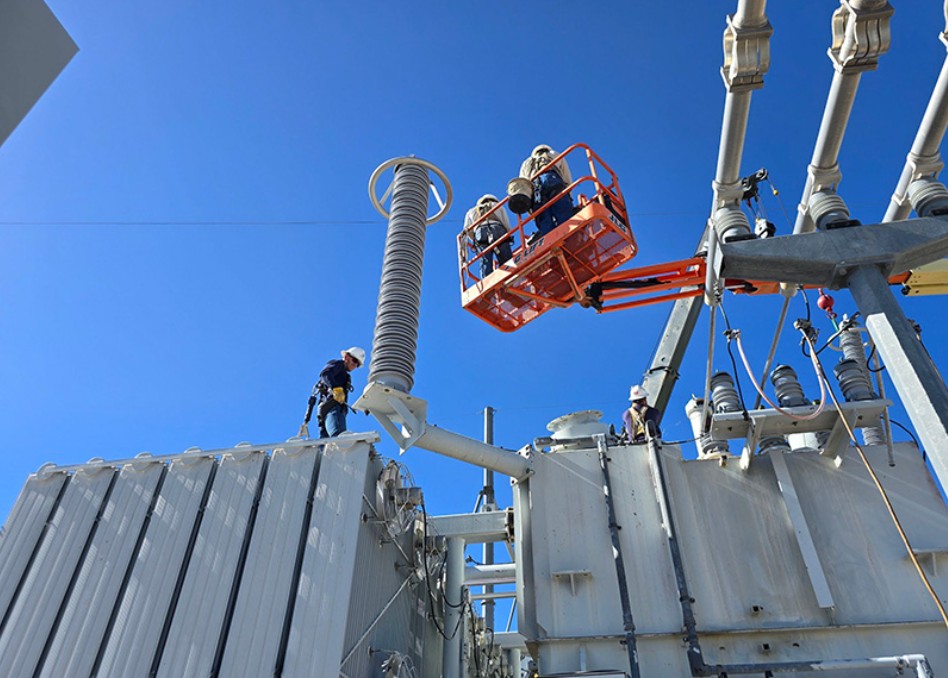
Large Power Transformers and Reactor Units
Large Power Transformers and Reactor Units
Supply and Sourcing for Transmission Expansion, Grid Modernization, Data Center Interconnection, and Emergency Replacement
Executive Overview
Large power transformers and reactor units form the backbone of high voltage transmission and bulk power systems. They enable voltage step up at generation sites, voltage step down at transmission interconnections, reactive power control, and system stability across regional grids.
These assets operate at the highest voltage classes in the power industry. They are typically custom engineered, built to order, and carry the longest lead times in the electrical equipment supply chain.
They are used in:
• Utility transmission substations
• Generation switchyards
• Renewable interconnection points
• HVDC converter stations
• Industrial transmission yards
• Large data center interconnect substations
Supply timing matters because these units often control energization of entire projects. A delayed transformer can delay a grid expansion, a generation commissioning milestone, or a data center build by months.
This page serves:
• Utilities and transmission operators
• Independent power producers
• Data center developers
• EPC contractors
• Procurement teams
• Asset managers
• Industrial facility operators
Services:
Industry Context and Real-World Constraints
Large power transformers represent one of the most constrained asset classes in the power industry.
Lead Time Realities
Typical lead times for new EHV power transformers and GSUs now extend from 18 to 36 months depending on voltage class and MVA rating. Factory slot availability, core steel allocation, copper supply, and skilled labor constraints directly impact delivery schedules.
Switchgear supply shortages and transformer lead time pressure frequently occur simultaneously, increasing energization risk for major projects.
Emergency generator procurement can often be accelerated. Large power transformers cannot. Their scale and customization limit fast-track manufacturing.
Grid Modernization Pressures
Transmission upgrades driven by renewable integration, load growth, and interconnection queues have increased demand for:
• EHV power transformers
• Autotransformers for voltage conversion
• Shunt reactors for voltage control
• Phase shifting transformers for power flow management
Interconnection complexity continues to rise. System operators require tighter impedance tolerances, thermal ratings, and protection coordination.
Data Center Demand
High density data center builds require robust transmission interconnect capacity. In many cases, energization is gated by delivery of large autotransformers or EHV units.
Urgent replacement programs are increasing due to aging infrastructure installed in the 1970s and 1980s. Many of those units are now beyond original design life.
Secondary Market Dynamics
The secondary market for large transformers is limited but strategically important.
Redeployable assets include:
• Surplus GSUs from retired generation
• Autotransformers from voltage conversions
• Mobile transformers for contingency response
• Strategic spares held by utilities
However, specification mismatch, impedance variance, and bushing configuration differences often limit direct interchangeability.
Technical Breakdown by Subcategory
GSU Transformers
Generator step up transformers increase generator output voltage to transmission level.
Used in:
• Thermal generation
• Combined cycle plants
• Wind and solar farms
• Peaking facilities
Engineering considerations:
• Generator impedance coordination
• Zero sequence impedance
• Thermal loading under dispatch cycling
• High short circuit withstand requirements
Specification alignment issues:
• Tap range alignment with system voltage
• Cooling class compatibility
• Bushing current rating margins
Procurement risks:
• Factory test schedule delays
• Shipping weight limitations
• Field assembly complexity
Operational failure risks include insulation degradation from thermal cycling and through fault exposure.
Replacement challenges include matching impedance and footprint within constrained switchyard layouts.
EHV Power Transformers
EHV transformers operate at transmission voltage classes such as 230 kV, 345 kV, 500 kV and above.
Used in:
• Transmission substations
• Bulk power interties
• Regional grid nodes
Engineering considerations:
• System fault levels
• Seismic requirements
• Transportation constraints
• Sound level limits
Specification alignment issues include:
• BIL coordination
• Winding configuration
• Cooling system redundancy
Procurement risks are driven by long manufacturing queues and limited global production capacity.
Failure risks include dielectric breakdown, bushing failure, and OLTC malfunction.
Autotransformers
Autotransformers connect two voltage levels within transmission systems.
Used for:
• 345 kV to 230 kV conversion
• 230 kV to 138 kV conversion
• Bulk load serving substations
Engineering considerations:
• Common winding configuration
• Through fault current exposure
• Neutral grounding
Procurement risks include misalignment of impedance with existing parallel units.
Replacement challenges include ensuring compatibility with protection schemes.
Phase Shifting Transformers
Phase shifting transformers control real power flow between network segments.
Used in:
• Congested transmission corridors
• Cross border interconnections
• Renewable integration zones
Engineering considerations:
• Phase angle adjustment range
• Thermal loading under variable flow
• Control integration
Specification errors can lead to improper power flow management.
Lead times are often longer due to complex winding arrangements.
Converter Transformers
Converter transformers interface with HVDC systems.
Used in:
• HVDC converter stations
• Renewable export links
• Long distance bulk transmission
Engineering considerations:
• Harmonic performance
• Valve side insulation stress
• Thermal management
Procurement risks include limited global suppliers.
Failure risks include insulation stress from DC bias and harmonics.
Shunt Reactors
Shunt reactors absorb reactive power to control voltage.
Used in:
• Long transmission lines
• Light load conditions
• High voltage cable systems
Engineering considerations:
• Continuous reactive absorption
• Switching transient performance
Replacement risk arises from impedance mismatch.
Mobile Transformers
Mobile transformers provide temporary or emergency replacement capacity.
Used for:
• Storm response
• Substation rebuilds
• Planned outage coverage
Engineering considerations:
• Transport envelope
• Rapid termination design
• Flexible voltage range
Procurement priority is driven by contingency planning.
Strategic Spares
Strategic spares are long lead electrical equipment held to mitigate extended outage risk.
Planning considerations include:
• Fleet standardization
• Storage conditions
• Oil preservation
• Periodic testing
Asset managers evaluate lifecycle cost and redeployment potential.
Components
Bushings
Bushings provide insulated conductor passage through grounded tanks.
Risks include oil leakage, partial discharge, and thermal overstress.
Correct current rating and BIL alignment are critical.
OLTC
On load tap changers regulate voltage under load.
Failure modes include contact wear, motor drive failure, and dielectric contamination.
OLTC maintenance intervals directly impact reliability.
Radiators
Radiators dissipate heat from transformer oil.
Improper flow design reduces cooling performance.
Cooling Skids
Cooling skids include pumps, heat exchangers, and control systems.
Integration mismatch can limit thermal rating.
System Integration and Dependencies
Large transformers interact with:
• Protection systems
• Relay schemes
• SCADA and control systems
• Grounding systems
• Cooling infrastructure
• Oil containment systems
Protection coordination must align with transformer impedance and fault duty.
Cooling design must consider ambient temperature and loading profile.
Environmental compliance includes oil containment and fire mitigation planning.
Lifecycle Perspective
Specification begins with system studies and load forecasting.
Sourcing must consider equipment lead times and factory capacity.
Procurement requires:
• Technical review
• Drawing approval
• Factory testing
• Documentation verification
Factory acceptance testing includes routine tests, impedance verification, and insulation testing.
Delivery logistics often require rail coordination and route surveys.
Installation involves:
• Foundation alignment
• Bushing installation
• Oil filling and processing
• Protection wiring
Commissioning includes ratio testing, insulation resistance, sweep frequency response analysis, and protection verification.
Maintenance includes oil testing, bushing monitoring, and OLTC inspection.
Replacement planning must account for transformer lead time and switchgear supply shortage impacts.
Secondary market redeployment requires impedance comparison, insulation testing, and documentation review.
Procurement Strategy and Risk Mitigation
Effective electrical procurement strategy includes:
• Early lead time forecasting
• Detailed specification review
• Impedance and loss verification
• Factory capacity validation
• Spare component strategy
Risk reduction methods include:
• Parallel sourcing evaluation
• Strategic spare acquisition
• Secondary market assessment
• Pre purchase inspection
Interoperability with existing fleet units reduces long term operational risk.
Testing documentation must be verified before shipment.
Alternate sourcing strategies may include redeployment of decommissioned assets where technically feasible.
Operational Risks and Failure Modes
Common mis specifications include:
• Incorrect impedance class
• Inadequate cooling margin
• Bushing under rating
• Insufficient seismic design
Installation errors include:
• Improper torque on bushing connections
• Contaminated oil handling
• Incomplete grounding
Maintenance gaps accelerate insulation aging.
Aging infrastructure increases risk of dielectric breakdown.
Commissioning delays frequently arise from incomplete documentation or failed factory tests.
Integration mismatches with protection systems can lead to nuisance trips or failure to clear faults.
Who This Page Is For
This page supports:
• Utilities managing transmission fleets
• Transmission operators planning grid upgrades
• Independent power producers commissioning new generation
• Data center developers securing interconnection capacity
• Industrial facilities requiring high voltage supply
• EPC contractors managing substation builds
• Procurement teams navigating power industry long lead equipment
• Asset managers evaluating lifecycle risk
Professional Discussion
Large power transformers and reactor units define project critical path in transmission and generation infrastructure. Managing specification accuracy, sourcing strategy, and lead time exposure requires experience across procurement, commissioning, and fleet management.
Jaylan Solutions
www.jaylansolutions.com
Supports utilities, EPC contractors, developers, and asset owners as a supply partner, specification aligned sourcing advisor, secondary market strategist, and long lead mitigation resource for large power transformers and reactor units.
Top Keywords:
power transformer
generator step up transformer
GSU transformer
autotransformer
EHV transformer
transformer lead time
transformer manufacturers
transformer replacement
shunt reactor transformer
