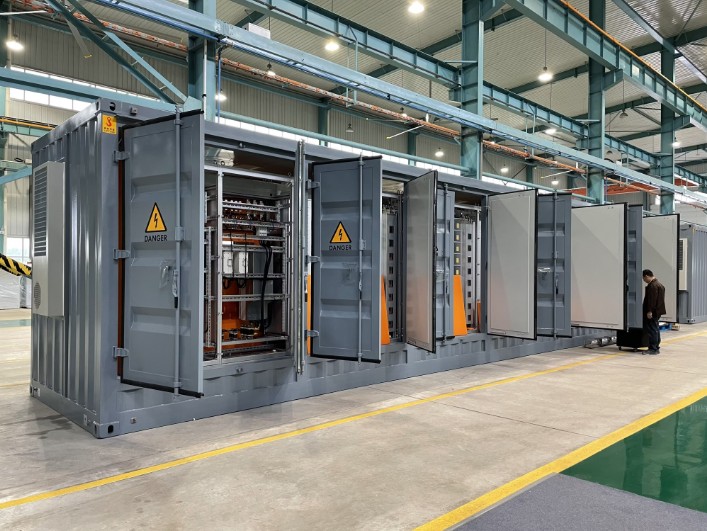
Substation Packages, Modular Substations, and E-Houses
Substation Packages, Modular Substations, and E-Houses for Utility and Industrial Power Infrastructure
Executive Overview
Substation packages, modular substations, and E-houses are engineered power distribution assemblies built off-site and delivered as integrated units. They combine medium voltage or high voltage switchgear, transformers, protection and control systems, DC systems, and auxiliary equipment into transportable or skid-mounted enclosures.
These systems are used in utility substations, renewable interconnections, data center campuses, industrial facilities, oil and gas sites, mining operations, and grid expansion projects. They are commonly deployed where construction schedules are compressed, site conditions are constrained, or long lead electrical equipment threatens project energization dates.
Supply timing matters because substation packages often sit on the critical path of grid interconnection, generation commissioning, and facility startup. Delays in modular substation delivery can postpone revenue generation, delay data center capacity commitments, and trigger liquidated damages in EPC contracts. For many projects, modularization is selected specifically to reduce field labor, compress installation windows, and manage switchgear supply shortage and transformer lead time exposure.
This page is written for procurement, engineering, operations, asset managers, and EPC contractors responsible for specification, sourcing, and lifecycle management of substation packages and E-houses.
Services:
Industry Context and Real-World Constraints
Demand for modular substations has increased due to grid modernization, renewable generation tie-ins, battery energy storage systems, and hyperscale data center expansion. At the same time, equipment lead times in the power industry remain extended for certain components, including medium voltage switchgear, protection relays, power transformers, and control panels.
Long lead electrical equipment directly affects substation package schedules because these assemblies depend on coordinated delivery of:
Switchgear lineups
Power or distribution transformers
Protection and control panels
SCADA integration hardware
DC battery systems
Factory integration reduces field construction risk, but it shifts risk upstream into manufacturing capacity, engineering design approval cycles, and component availability.
Commissioning pressure is real. Utilities and independent power producers often work against seasonal load forecasts, interconnection agreements, or power purchase agreement deadlines. Data center developers operate against capacity commitments to tenants. In these environments, supply and sourcing of modular substations supporting grid expansion, data center builds, transmission upgrades, and urgent replacement programs becomes a priority discussion.
Secondary market dynamics also matter. Redeployed E-houses, surplus switchgear, and refurbished transformer packages are sometimes evaluated to mitigate transformer lead time or switchgear supply shortage. However, interoperability, documentation completeness, and code compliance must be validated before redeployment.
Technical Breakdown by Subcategory
E-Houses
An E-house is a prefabricated electrical building that houses switchgear, motor control centers, protection panels, control systems, and auxiliary equipment within a transportable steel structure.
Where used
Utility distribution substations
Industrial plant expansions
Renewable generation collector stations
Data center utility service entrances
Engineering considerations
Arc flash containment and pressure relief
Heat rejection and HVAC load calculation
Cable entry and trench interface
Seismic and wind loading
Fire detection and suppression
Specification alignment issues
Voltage class mismatches
Short circuit rating coordination
Relay scheme integration with existing protection philosophy
Utility communication protocol requirements
Procurement risks
Incomplete relay settings documentation
Switchgear manufacturer compatibility constraints
Inadequate FAT planning
Operational failure risks
HVAC failure leading to overheating
Condensation and moisture ingress
Improper grounding and bonding
Replacement challenges
Limited site footprint for swap-out
Cable re-termination downtime
Outage coordination constraints
Prefabricated Substations
Prefabricated substations combine transformers, switchgear, protection systems, and buswork into a factory-assembled structure designed for rapid field installation.
Where used
Distribution grid upgrades
Industrial process plants
Utility service extensions
Engineering considerations
Transformer impedance coordination
Bus rating and thermal performance
Ground grid interface
Oil containment and environmental compliance
Specification alignment issues
Utility metering requirements
BIL rating alignment
Clearance and creepage distances
Procurement risks
Transformer lead time
Bushing and accessory availability
Incomplete factory testing scope
Operational failure risks
Transformer cooling failure
Improper relay coordination
Oil leaks due to transport damage
Replacement challenges
Crane access
Oil handling logistics
Environmental permitting
Skid Substations
Skid substations mount transformers and switchgear on structural skids for oilfield, mining, or industrial deployment.
Where used
Oil and gas pads
Temporary industrial power
Remote sites
Engineering considerations
Transport loading limits
Structural rigidity
Vibration resistance
Hazardous area classification
Specification alignment issues
Motor starting requirements
Ground fault protection settings
Neutral grounding resistor sizing
Procurement risks
Short circuit duty underestimation
Environmental rating misalignment
Operational failure risks
Mechanical fatigue
Improper grounding
Replacement challenges
Limited lifting infrastructure
Remote logistics
Containerized Substations
Containerized substations are ISO container-based assemblies integrating transformers, switchgear, and control systems.
Where used
Renewable projects
Battery storage sites
Urban constrained environments
Engineering considerations
Thermal management
Arc venting strategy
Cable routing constraints
Specification alignment issues
Utility inspection standards
Fire code compliance
Procurement risks
Container structural modification delays
Accessory backorders
Operational failure risks
Heat buildup
Limited maintenance clearance
Replacement challenges
Container dimension limitations
Transport permitting
Mobile Substations
Mobile substations are trailer-mounted transformer and switchgear assemblies designed for emergency generator procurement support or temporary grid replacement.
Where used
Storm recovery
Transformer failure replacement
Planned outage bridging
Engineering considerations
Road weight compliance
Flexible high voltage connections
Rapid grounding system deployment
Specification alignment issues
Voltage ratio matching
Protection scheme adaptability
Procurement risks
Limited availability
Transportation scheduling
Operational failure risks
Improper setup
Grounding faults
Replacement challenges
Rapid deployment logistics
Utility coordination
Protection Buildings
Protection buildings house relay panels, SCADA systems, batteries, and control wiring for substations.
Engineering considerations
DC battery sizing
Redundancy architecture
Communication redundancy
Risks
Incomplete documentation
Firmware mismatches
Cybersecurity compliance gaps
Integrated Power Blocks
Integrated power blocks combine transformers, switchgear, bus duct, and protection into a single engineered unit, often for generation or large industrial loads.
Engineering considerations
Fault current coordination
Bus differential protection
Transformer inrush management
Procurement risks
Custom design cycles
Factory capacity constraints
Operational risks
Single point of failure concentration
Integration complexity
System Integration and Dependencies
Substation packages interface with:
Transmission and distribution feeders
Protection relay schemes
SCADA and control systems
Grounding grids
Cooling and HVAC systems
Environmental containment systems
Integration failure often stems from mismatched CT ratios, incorrect relay logic, bus rating discrepancies, or incomplete documentation. Coordination between protection settings and upstream system studies is critical before commissioning.
Lifecycle Perspective
Specification begins with load flow studies, short circuit calculations, and protection coordination analysis.
Sourcing requires alignment with manufacturer production capacity and evaluation of transformer lead time and switchgear supply shortage exposure.
Procurement must secure:
Approved drawings
Bill of materials validation
Factory acceptance testing scope
Shipping and rigging plans
Factory testing should include functional relay testing, insulation resistance testing, control logic validation, and witness testing where required.
Delivery logistics must consider oversize transport permits and crane requirements.
Installation includes grounding integration, cable termination, oil filling where applicable, and protection system validation.
Commissioning involves secondary injection testing, relay verification, SCADA integration, and energization sequencing.
Maintenance planning must address HVAC systems, relay firmware updates, transformer oil testing, and periodic inspection.
Replacement planning may evaluate redeployment or secondary market sourcing to reduce long lead equipment exposure.
Procurement Strategy and Risk Mitigation
Effective procurement planning includes:
Early design freeze
Lead time verification at bid stage
Alternate manufacturer qualification
Review of relay compatibility
Verification of spare parts availability
Secondary market sourcing can reduce schedule risk but requires:
Nameplate verification
Test reports
Compatibility confirmation
Inspection prior to shipment
Risk mitigation requires coordination between engineering and procurement to prevent specification gaps that delay energization.
Operational Risks and Failure Modes
Common issues include:
Incorrect short circuit rating selection
Inadequate arc flash design
Improper grounding integration
Overheating due to HVAC undersizing
Delayed commissioning due to incomplete protection settings
Aging infrastructure risk increases when replacement planning is reactive rather than forecasted.
Who This Page Is For
This page is written for:
Utilities
Transmission operators
Independent power producers
Data center developers
Industrial facilities
EPC contractors
Procurement teams
Asset managers
If you are responsible for grid expansion, facility startup, emergency replacement, or long lead mitigation, modular substations and E-houses require coordinated technical and procurement oversight.
Professional Discussion
Jaylan Solutions
www.jaylansolutions.com
Jaylan Solutions works as a supply partner, specification-aligned sourcing advisor, secondary market strategist, and long-lead mitigation resource for substation packages, modular substations, and E-houses. Discussions focus on specification alignment, supply timing, and lifecycle planning rather than transactional sales.
Keywords:
modular substation
substation package
E house electrical
prefabricated substation
containerized substation
mobile substation
skid mounted substation
integrated power block
protection building substation
utility substation package
modular electrical substation
temporary mobile substation
transformer lead time
switchgear supply shortage
equipment lead times power industry
long lead electrical equipment
emergency substation replacement
factory built substation
substation EPC package
rapid deployment substation
