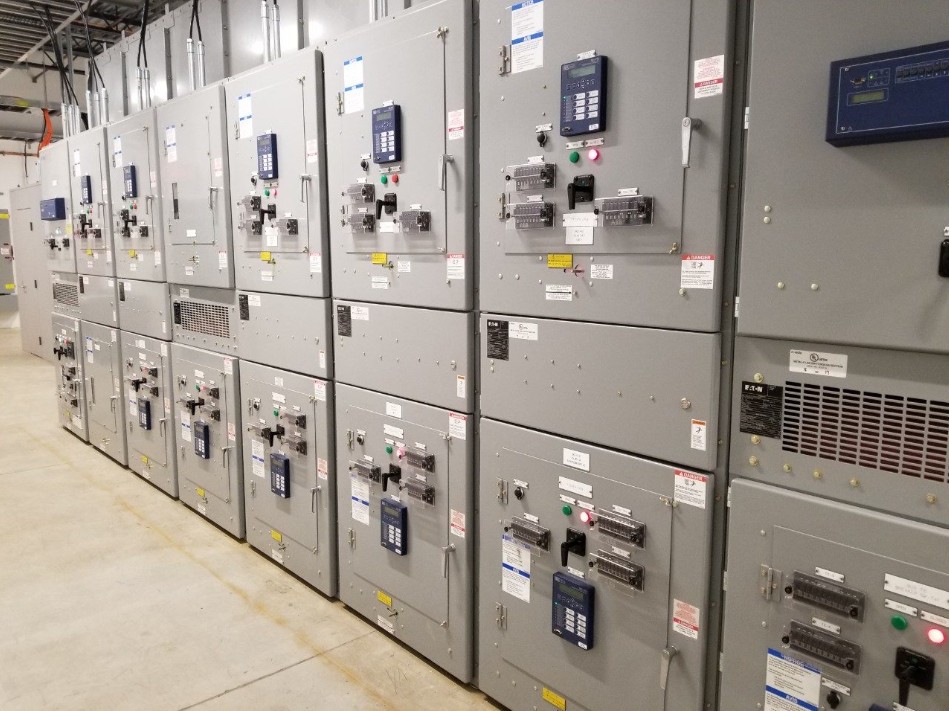
Medium Voltage Switchgear
Medium Voltage Switchgear and Distribution Supply and Sourcing for Grid Expansion, Industrial Power Systems, Data Center Infrastructure, and Replacement Programs
Executive Overview
Medium voltage switchgear and distribution equipment form the control backbone between utility service and downstream electrical loads. Operating typically between 1 kV and 38 kV, these systems receive, distribute, protect, and control electrical power in substations, industrial plants, large commercial campuses, and data centers.
Medium voltage switchgear is installed in:
• Utility distribution substations
• Industrial manufacturing facilities
• Oil and gas sites
• Mining operations
• Data center substations and main distribution rooms
• Renewable energy interconnection points
• Large commercial and institutional campuses
Operationally, the role is direct. Accept incoming power. Protect circuits. Control feeders. Coordinate protection. Isolate faults. Maintain system stability.
Supply timing matters because medium voltage equipment sits on the critical path of energization. Without installed and commissioned switchgear, no transformer can be loaded, no feeder energized, and no downstream system commissioned. Procurement delays directly affect construction schedules, outage windows, and revenue start dates.
This page addresses procurement teams, engineers, operations leaders, asset managers, and EPC contractors responsible for specification alignment, lead time control, installation coordination, and lifecycle reliability.
Services:
Industry Context and Real-World Constraints
Medium voltage switchgear supply has experienced extended equipment lead times across multiple manufacturers. Metalclad lineups, arc resistant gear, and custom outdoor enclosures often carry production schedules exceeding standard project windows. Factory production slots, protective relay integration, and custom bus configurations increase risk of delay.
Common constraints include:
• Long factory lead times for metalclad assemblies
• Relay integration and protection scheme programming delays
• Utility approval cycles
• Seismic and arc flash compliance requirements
• Custom bus ratings and fault duty verification
• Supply chain constraints on breakers and vacuum interrupters
Grid modernization programs, substation hardening initiatives, and data center expansion have placed sustained demand on medium voltage switchgear supply. Interconnection projects further add pressure when switchgear must align with transformer delivery, protection studies, and SCADA integration.
Secondary market activity has increased, particularly for emergency generator procurement scenarios and rapid plant expansions. However, compatibility risks and documentation gaps must be evaluated carefully.
Technical Breakdown by Subcategory
MV Metalclad Switchgear
What it is
Metalclad switchgear consists of compartmentalized, grounded metal-enclosed assemblies with draw-out vacuum circuit breakers. Each major component is isolated within its own grounded section.
Where it is used
Primary distribution in substations, large industrial facilities, and data center main switch rooms.
Engineering considerations
• Short circuit rating verification
• BIL alignment
• Breaker interrupting capacity
• Protection relay integration
• Bus bracing
• Future expansion sections
Specification alignment issues
Misalignment between fault duty and breaker rating is common. Relay schemes must align with coordination studies.
Procurement risks
Factory breaker shortages and custom relay programming extend lead times.
Operational failure risks
Breaker mechanism wear, insulation degradation, and improper maintenance of draw-out assemblies.
Replacement challenges
Retrofitting into existing lineups often requires bus modifications and relay upgrades.
Arc Resistant Switchgear
What it is
Arc resistant switchgear is designed to redirect internal arc flash energy away from personnel through reinforced construction and pressure relief channels.
Where it is used
High-occupancy electrical rooms, critical infrastructure facilities, and environments with strict arc flash mitigation requirements.
Engineering considerations
• Type 1 or Type 2 arc resistance classification
• Plenum venting requirements
• Room pressure relief provisions
• Arc duration testing standards
Specification alignment issues
Incorrect arc classification or inadequate room venting design can compromise protection intent.
Procurement risks
Custom arc rated enclosures extend manufacturing time and increase shipping complexity.
Operational failure risks
Improper installation of plenum ducts or blocked exhaust paths.
Replacement challenges
Physical space constraints and ceiling height requirements often complicate retrofit work.
Outdoor Medium Voltage Switchgear
What it is
Weatherproof metal-enclosed medium voltage assemblies designed for exterior installation.
Where it is used
Substations, renewable interconnections, industrial yards, and remote facilities.
Engineering considerations
• NEMA enclosure rating
• Temperature range
• Space heating
• Condensation control
• Seismic anchoring
Specification alignment issues
Environmental misalignment is common in coastal, high humidity, or extreme temperature locations.
Procurement risks
Custom enclosures and environmental controls add production time.
Operational failure risks
Moisture intrusion and corrosion if environmental controls are inadequate.
Replacement challenges
Foundation alignment and cable entry geometry must match existing infrastructure.
Switchboards
What it is
Low to medium voltage distribution assemblies that route power downstream to panels, MCCs, and large loads.
Where it is used
Main distribution rooms, industrial plants, large commercial buildings.
Engineering considerations
• Bus rating
• Feeder breaker sizing
• Short circuit rating
• Metering integration
Specification alignment issues
Improper coordination with upstream protection can cause nuisance tripping.
Procurement risks
Breaker component shortages and custom metering requirements.
Operational failure risks
Overloaded feeders and thermal stress on bus systems.
Replacement challenges
Space limitations and existing cable routing constraints.
Motor Control Centers (MCC)
What it is
Modular assemblies housing motor starters, protection devices, and control units.
Where it is used
Industrial facilities, water treatment plants, manufacturing operations.
Engineering considerations
• Starter type
• Fault current rating
• Control voltage alignment
• Future bucket expansion
Specification alignment issues
Mismatch between motor horsepower and starter capacity.
Procurement risks
Component-level delays in contactors and overload relays.
Operational failure risks
Improper ventilation and maintenance neglect.
Replacement challenges
Phased shutdown planning is required to avoid operational disruption.
VFD Lineups
What it is
Integrated variable frequency drive assemblies controlling motor speed and torque.
Where it is used
HVAC systems, pumping stations, industrial processing lines, data center cooling plants.
Engineering considerations
• Harmonic mitigation
• Cooling requirements
• Cable length limitations
• EMI control
Specification alignment issues
Inadequate harmonic filtering can impact upstream transformers and switchgear.
Procurement risks
Drive component availability and factory programming schedules.
Operational failure risks
Overheating and improper commissioning parameters.
Replacement challenges
Integration with legacy control systems and SCADA networks.
System Integration and Dependencies
Medium voltage switchgear interacts directly with:
• Power transformers
• Protective relay systems
• SCADA and control networks
• Backup generator systems
• UPS and downstream distribution
• Cooling systems in conditioned electrical rooms
Protection coordination studies must align across all voltage levels. Environmental compliance includes arc flash labeling, grounding verification, and local electrical code requirements.
Improper integration delays commissioning and increases risk of rework.
Lifecycle Perspective
Medium voltage switchgear lifecycle management includes:
Specification
Alignment with fault studies, load growth projections, and site conditions.
Sourcing
Evaluation of manufacturer lead times, factory testing availability, and documentation completeness.
Procurement
Mitigation of equipment lead times and breaker supply constraints.
Factory Testing
Witness testing when required for critical infrastructure.
Delivery Logistics
Heavy equipment handling coordination and site access planning.
Installation
Alignment of bus connections, cable terminations, and grounding systems.
Commissioning
Protection relay testing and functional verification.
Maintenance
Breaker inspection, insulation resistance testing, and thermal scanning.
Replacement
Planning around transformer lead time and switchgear supply shortage scenarios.
Secondary market sourcing may support emergency generator procurement programs or rapid expansion. Documentation and compatibility must be verified.
Procurement Strategy and Risk Mitigation
Effective procurement includes:
• Early fault duty validation
• Relay specification confirmation
• Manufacturer production slot reservation
• Alternate sourcing analysis
• Spare breaker procurement
• Documentation completeness review
• Review of factory test reports
Interoperability across breakers, relays, and control systems must be confirmed prior to shipment. EPC electrical procurement teams should validate equipment lead times against construction sequencing.
Secondary market options should include full inspection, testing documentation, and verification of breaker cycle counts.
Operational Risks and Failure Modes
Common risks include:
• Underrated fault capacity
• Improper protection coordination
• Inadequate arc classification
• Installation misalignment of bus joints
• Improper torque during termination
• Deferred breaker maintenance
• Inadequate ventilation for VFD heat rejection
Aging infrastructure presents insulation breakdown risks and obsolete breaker replacement challenges.
Commissioning delays often stem from incomplete documentation or relay misprogramming.
Who This Page Is For
This authority resource supports:
• Utilities
• Transmission operators
• Independent power producers
• Data center developers
• Industrial facilities
• EPC contractors
• Procurement teams
• Asset managers
Professional Discussion
Medium voltage switchgear and distribution equipment are specification-driven assets that determine whether a facility can energize safely and on schedule.
Jaylan Solutions
www.jaylansolutions.com
Serves as a supply partner, specification-aligned sourcing advisor, secondary market strategist, and long-lead mitigation resource for medium voltage switchgear and distribution programs.
Keywords:
· MV metalclad
· Arc resistant
· Outdoor MV
· Switchboards
· MCC
· VFD lineups
