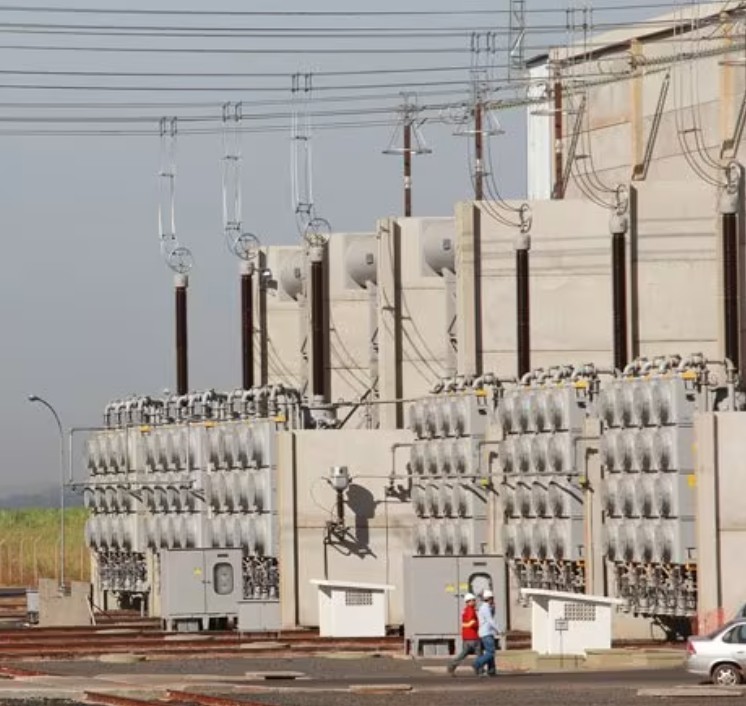
HVDC Converter Station Equipment
HVDC Converter Station Equipment Supply and Sourcing for Transmission Expansion and Grid Interconnection Projects
Executive Overview
HVDC converter station equipment forms the backbone of long-distance bulk power transfer, offshore wind interconnections, back-to-back interties, and cross-border transmission projects. A converter station enables conversion between AC and DC power, allowing controlled power flow over long distances with lower losses and improved system stability.
Core HVDC converter station equipment includes converter transformers, smoothing reactors, DC switchyards, cooling systems, and control systems. These components operate as a tightly integrated system. Failure, mis-specification, or late delivery of one element can delay energization of the entire project.
These systems are used in:
• Long-distance transmission corridors
• Offshore wind export systems
• Interconnection between asynchronous grids
• Back-to-back stations for grid stabilization
• Bulk power transfer into urban load centers
• High-capacity data center and industrial power corridors
Supply timing matters because HVDC projects are capital intensive and schedule driven. Converter transformers and reactors are often long lead electrical equipment with manufacturing windows extending beyond 18 to 36 months depending on rating and complexity. Grid modernization and renewable integration programs are compressing timelines, increasing pressure on procurement teams and EPC contractors to secure capacity early.
This page is written for procurement teams, transmission engineers, EPC electrical contractors, asset managers, and operations leadership responsible for high-voltage infrastructure delivery.
Services:
Industry Context and Real-World Constraints
HVDC converter station supply is constrained by limited global manufacturing capacity. Converter transformers are custom engineered for each project. Valve hall integration, harmonic performance, and insulation coordination must be defined early. Any late design changes can reset transformer lead time and testing schedules.
Current market realities include:
• Extended transformer lead time for HVDC class units
• Reactor manufacturing bottlenecks
• Steel and copper cost volatility
• Factory test scheduling constraints
• Limited factory acceptance test windows
• Logistics challenges for ultra-heavy transport
• Offshore wind and interconnection queue growth
Grid expansion programs and renewable integration are driving record demand. Data center development in constrained urban nodes is increasing interest in HVDC back-to-back solutions and high-capacity point-to-point transmission links.
Secondary market dynamics exist but are limited. HVDC converter transformers are rarely interchangeable without major engineering validation. Redeployment requires insulation life assessment, test record review, and often bushing or tap changer replacement.
Urgency-driven procurement often occurs under:
• Transmission outage constraints
• Interconnection deadlines
• Renewable project COD penalties
• Emergency replacement of failed converter transformers
In these cases, alternate sourcing strategies and early technical validation are critical.
Technical Breakdown by Subcategory
Converter Transformers
Converter transformers interface the AC grid with the HVDC converter valves. They provide voltage transformation, electrical isolation, and phase shifting depending on topology.
Engineering considerations include:
• Valve side winding configuration
• Harmonic performance
• DC bias withstand capability
• Insulation coordination
• Tap changer design
• Thermal performance under cyclic loading
Specification alignment issues often arise around impedance tolerance, tap range, cooling class, and bushing ratings. Minor deviations can affect harmonic filters, valve operation, and system losses.
Procurement risks include long factory queues, custom core design, and limited test slots. Factory acceptance testing must include routine, type, and special HVDC tests as defined by project specification.
Operational failure risks include:
• Insulation breakdown due to DC stress
• Bushing failure
• On-load tap changer wear
• Cooling degradation
• Partial discharge progression
Replacement is complex. Transport weight, foundation design, and bus alignment limit interchangeability.
Smoothing Reactors
Smoothing reactors reduce DC current ripple and limit fault current. They are typically installed on the DC side between converter valves and the DC yard.
Engineering considerations include:
• Inductance rating
• Continuous current rating
• Thermal class
• Insulation design
• Seismic performance
Specification errors in inductance tolerance or current rating can affect system harmonic performance and valve stress.
Procurement risks include copper availability and manufacturing lead time. Outdoor air-core designs require large footprints and structural considerations.
Operational risks include insulation degradation, mechanical vibration, and overheating under overload.
Replacement requires footprint verification and revalidation of harmonic performance.
DC Switchyards
DC switchyards provide switching, isolation, and protection on the DC side. They include DC breakers where applicable, disconnectors, surge arresters, and bus structures.
Engineering considerations include:
• DC voltage class
• Creepage distance
• Pollution level
• Lightning protection
• Insulation coordination
DC switching technology is specialized. Misalignment between breaker technology and converter topology can cause integration problems.
Procurement risks include limited supplier base for high-voltage DC breakers and custom insulator fabrication.
Operational risks include insulation flashover, arrester failure, and control miscoordination.
Replacement often requires outage windows and coordination with system operators.
Cooling Systems
HVDC converter stations generate significant heat within valve halls and converter transformers. Cooling systems may include water-glycol systems, heat exchangers, pumps, and redundant control logic.
Engineering considerations include:
• Thermal load calculation
• Redundancy configuration
• Water quality management
• Pump reliability
• Heat rejection method
Specification gaps in redundancy or control integration can lead to valve derating.
Procurement risks include pump supply, heat exchanger fabrication time, and integration with building design.
Operational risks include coolant contamination, pump failure, and control logic errors leading to overheating.
Replacement planning must consider shutdown sequencing and recommissioning.
Control Systems
HVDC control systems manage power flow, voltage regulation, protection logic, and communication with the AC network.
Engineering considerations include:
• Control redundancy
• Cybersecurity compliance
• Interface with protection relays
• SCADA integration
• Firmware lifecycle
Specification alignment with utility standards is critical. Misalignment can delay commissioning.
Procurement risks include long integration testing cycles and vendor-specific architecture constraints.
Operational risks include software faults, communication failure, and cybersecurity exposure.
Replacement or upgrade requires staged commissioning and system operator coordination.
System Integration and Dependencies
HVDC converter station equipment interacts directly with:
• AC transmission systems
• Protection and relay systems
• Harmonic filters
• Reactive compensation equipment
• Station service power
• Grounding systems
• Environmental controls
Cooling systems must align with transformer loading profiles. Control systems must coordinate with AC protection schemes. DC yard insulation levels must match environmental pollution and altitude conditions.
Failure to align specification across these dependencies can delay commissioning or reduce available transfer capacity.
Lifecycle Perspective
HVDC converter station equipment lifecycle begins with conceptual specification and grid study validation.
Key phases include:
• Preliminary system studies
• Specification drafting
• Vendor technical clarification
• Procurement scheduling
• Factory design review
• Manufacturing
• Factory acceptance testing
• Transport planning
• Site installation
• Commissioning testing
• Performance validation
HVDC equipment lead times can exceed typical power industry equipment lead times. Early procurement strategy is required to mitigate long lead electrical equipment exposure.
Factory testing is critical. HVDC transformer testing includes specialized dielectric and thermal tests not found in standard AC units.
Logistics planning must address oversize transport, port handling, and route clearance.
Maintenance planning must include:
• Oil sampling and diagnostics
• Bushing monitoring
• Cooling system inspection
• Control firmware updates
• Periodic insulation testing
Secondary market redeployment is rare but possible with extensive engineering review and condition assessment.
Procurement Strategy and Risk Mitigation
Effective procurement requires early capacity reservation with manufacturers. Waiting until full design freeze can jeopardize project schedule.
Risk mitigation strategies include:
• Early technical engagement with suppliers
• Parallel sourcing evaluation
• Transformer design review prior to PO release
• Validation of harmonic and system studies
• Factory slot reservation
• Spare component strategy
• Evaluation of secondary market assets where feasible
Alternate sourcing may include partially completed units or canceled project equipment. However, full specification validation is required before redeployment.
Documentation review must include:
• Test reports
• Material certificates
• Factory inspection records
• Control software documentation
Procurement teams must coordinate closely with EPC engineering to avoid spec drift during fabrication.
Operational Risks and Failure Modes
Common issues observed in HVDC projects include:
• Underestimated harmonic impacts
• Insufficient cooling redundancy
• Bushing mis-specification
• Control system firmware conflicts
• Insulation aging due to DC stress
• Improper installation torque on high-current connections
• Grounding misalignment
Commissioning delays often result from integration mismatches between control systems and AC protection schemes.
Aging infrastructure risks include insulation degradation, moisture ingress, and tap changer wear.
Early diagnostics and predictive maintenance reduce forced outages.
Who This Page Is For
This authority resource supports:
Utilities planning long-distance transmission
Transmission system operators
Independent power producers
Offshore wind developers
Data center infrastructure developers
Industrial facilities requiring bulk interconnection
EPC contractors delivering HVDC projects
Procurement teams managing long lead equipment
Asset managers planning lifecycle strategy
Professional Discussion
Jaylan Solutions supports supply strategy, specification-aligned sourcing, and long-lead mitigation for HVDC converter station equipment.
As a supply partner and secondary market strategist, Jaylan Solutions works with procurement and engineering teams to evaluate sourcing options, validate specification alignment, and reduce project schedule risk.
For technical discussion and sourcing support, visit:
Jaylan Solutions
http://www.jaylansolutions.com
Keywords:
HVDC converter station equipment
HVDC converter transformer
HVDC smoothing reactor
HVDC DC switchyard
HVDC cooling system
HVDC control system
HVDC transformer lead time
HVDC equipment supply
HVDC equipment sourcing
HVDC project procurement
long lead electrical equipment power industry
HVDC substation equipment
HVDC converter station components
HVDC transmission project equipment
HVDC emergency transformer replacement
HVDC station upgrade equipment
HVDC power transmission infrastructure
