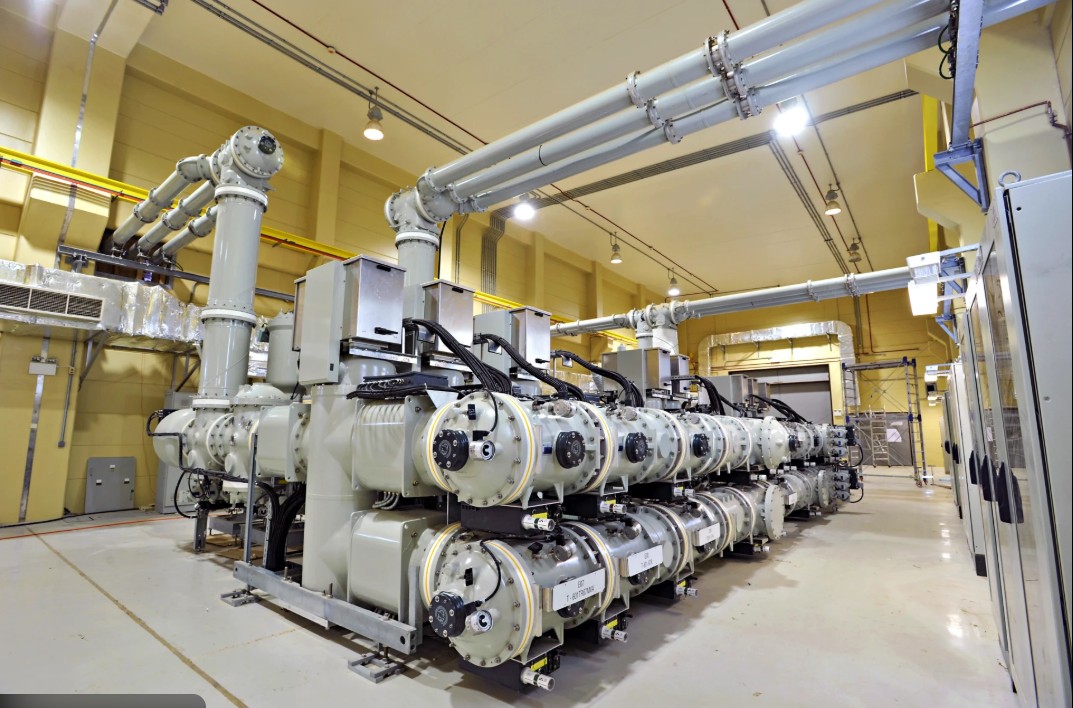
HV GIS / AIS Substation Switchgear
HV GIS / AIS Substation Switchgear Supply and Sourcing for Transmission Expansion, Data Center Interconnection, and Substation Modernization
Executive Overview
High voltage GIS and AIS substation switchgear form the backbone of transmission and subtransmission networks. These systems control, isolate, and protect bulk power at voltage classes typically ranging from 69 kV through 500 kV and above.
Gas insulated switchgear lineups and air insulated switchgear bays are deployed in utility transmission substations, generation switchyards, industrial substations, renewable interconnection points, and large data center interconnect facilities. Hybrid GIS configurations are increasingly used where footprint constraints and reliability requirements intersect.
Switchgear determines how power flows through a substation. It defines bus configuration, sectionalizing capability, transformer protection, and line isolation strategy. In grid expansion and interconnection projects, switchgear often becomes a schedule driver due to engineering review cycles, factory production capacity, and testing requirements.
Supply timing matters. Long lead electrical equipment in the power industry can extend beyond 60 to 100 weeks depending on voltage class, configuration complexity, and global manufacturing capacity. Transformer lead time and switchgear supply shortage conditions frequently overlap, creating commissioning risk for utilities and EPC contractors.
This page addresses technical, procurement, lifecycle, and secondary market considerations for HV GIS and AIS substation switchgear.
Services:
Industry Context and Real-World Constraints
Lead Time Realities
HV GIS lineups are custom engineered assemblies. Each lineup is built to a specific bus scheme, fault rating, BIL requirement, protection philosophy, and site condition. Manufacturing capacity is concentrated among a limited number of global OEMs. During periods of grid modernization, renewable interconnection growth, and data center expansion, production slots become constrained.
AIS bays are less compact but still subject to breaker manufacturing capacity, steel structure fabrication timelines, and control panel integration. For high voltage classes, breaker lead times alone can exceed a year.
Equipment lead times in the power industry are driven by:
Raw material allocation for copper and specialty steel
SF6 gas handling component availability
Factory test bay capacity
Utility specification approval cycles
Export compliance and logistics constraints
Urgent replacement programs after catastrophic failure or storm damage frequently encounter limited immediate availability. Emergency generator procurement may be faster than high voltage switchgear replacement.
Commissioning and Interconnection Pressure
Transmission upgrades and data center energization schedules often depend on switchgear delivery. Interconnection agreements define firm energization dates. Delays in GIS shipment or AIS breaker delivery can cascade into liquidated damages exposure for EPC contractors.
Hybrid GIS solutions are sometimes selected late in design to mitigate site constraints. Late specification shifts can further extend schedule risk.
Secondary Market Dynamics
The secondary market for high voltage switchgear is limited but active. Surplus AIS breakers, disconnects, and control panels are more common than complete GIS lineups. Redeployment feasibility depends on:
Voltage class match
Short circuit rating alignment
Protection scheme compatibility
Remaining service life
Gas integrity history for GIS components
Proper evaluation is critical before redeployment.
Technical Breakdown by Subcategory
GIS Lineups
What it is
Gas insulated switchgear lineups integrate breakers, disconnects, earthing switches, bus conductors, and current and voltage transformers within a sealed, pressurized gas compartment.
Where it is used
Urban transmission substations
Underground substations
Offshore or space-constrained facilities
High reliability interconnection points
Engineering considerations
Rated voltage and BIL coordination
Short circuit interrupting rating
Gas density monitoring and leak detection
Internal arc classification
Seismic qualification
Partial discharge performance
Specification alignment issues
Utility standards for gas monitoring, redundancy in control units, and communication protocols vary widely. Misalignment between EPC design documents and utility protection philosophy can delay approval.
Procurement risks
Long manufacturing lead times
Limited factory acceptance test windows
Export control on certain components
Specialized transportation requirements
Operational failure risks
Gas leakage leading to pressure alarms
Mechanism wear in breaker assemblies
Control unit obsolescence
Internal arc events in aging units
Replacement challenges
GIS replacement often requires outage coordination across multiple feeders. Partial replacement may be impractical due to flange spacing and manufacturer-specific interface design.
AIS Bays
What it is
Air insulated switchgear bays consist of open air bus structures, circuit breakers, disconnect switches, instrument transformers, and support steel.
Where it is used
Conventional outdoor substations
Rural transmission yards
Generation switchyards
Engineering considerations
Clearances based on voltage class and pollution level
Bus configuration such as ring bus or breaker-and-a-half
Lightning performance
Ground grid integration
Specification alignment issues
Interchangeability of breakers across bays requires consistent interrupting ratings and control wiring philosophy.
Procurement risks
Breaker manufacturing backlog
Steel fabrication capacity
Weather-related erection delays
Operational failure risks
Insulator contamination
Mechanical wear on disconnects
Misalignment of linkages
Replacement challenges
AIS components are more modular than GIS. However, foundation geometry and bus elevation constraints can complicate partial replacements.
Hybrid GIS
What it is
Hybrid GIS combines gas insulated breaker modules with air insulated bus and disconnect sections.
Where it is used
Brownfield expansions
Sites with moderate footprint constraints
Retrofits requiring reduced outage duration
Engineering considerations
Interface design between gas and air sections
Differential protection coordination
Maintenance access
Procurement risks
Hybrid solutions may involve multiple OEM supply streams. Coordination risk increases when mixing manufacturers.
Operational failure risks
Complex interfaces can introduce alignment and insulation coordination issues.
Replacement challenges
Compatibility with existing bus structure is critical. Detailed dimensional verification is required.
Transformer Bays
What it is
Switchgear configuration dedicated to transformer connection, including breaker, disconnects, and protection CTs.
Where it is used
Transmission substations
Generation step-up yards
Industrial high voltage substations
Engineering considerations
Transformer differential protection
Inrush current tolerance
Fault contribution coordination
Procurement risks
Transformer lead time and switchgear lead time must align. Mismatch creates stranded assets on site.
Operational failure risks
Improper CT ratio selection can compromise protection performance.
Replacement challenges
Outage windows are often limited due to load dependency.
Line Bays
What it is
Switchgear bay connecting transmission lines to bus systems.
Engineering considerations
Line protection schemes
Communication-assisted tripping
Surge arrester placement
Procurement risks
Protection relay integration can delay commissioning if not validated early.
Bus Sections
What it is
Bus tie or sectionalizing equipment allowing isolation of portions of the bus.
Engineering considerations
Fault current withstand rating
Operational switching sequence
Operational risks
Improper sectionalizing increases exposure during fault events.
Component Considerations
Disconnects
Used for visible isolation. Critical for safe maintenance. Mechanical integrity and contact resistance are key factors.
Earthing Switches
Provide grounding during maintenance. Must be interlocked with primary disconnects to prevent unsafe operation.
Gas Systems
Gas density monitoring, leak detection, and environmental compliance are critical in GIS systems. Handling procedures must meet regulatory requirements.
Control Units
Relay panels, local control cabinets, and communication interfaces must align with substation automation standards and cybersecurity requirements.
System Integration and Dependencies
HV GIS and AIS switchgear integrate with:
Power transformers
Protection relays
SCADA systems
Substation automation platforms
Cooling systems for enclosed GIS rooms
Grounding grids
Surge protection systems
Environmental conditions such as altitude, temperature, seismic zone, and pollution level directly influence specification.
Compliance with IEEE, IEC, and utility-specific standards must be validated before factory release.
Lifecycle Perspective
Specification
Early alignment between utility standards, EPC design, and manufacturer capability reduces redesign risk.
Sourcing
Switchgear supply and sourcing must account for factory slot availability and test bay capacity.
Procurement
Commercial terms should reflect realistic equipment lead times in the power industry. Expediting options are limited once production begins.
Documentation
Submittals include drawings, test reports, gas handling procedures, and protection settings.
Factory Testing
Routine and type tests confirm interrupting capacity and insulation performance. Factory witness scheduling must be secured early.
Delivery Logistics
GIS shipping requires specialized packaging and handling to protect gas compartments.
Installation and Commissioning
Gas filling, timing tests, protection verification, and interlock checks are critical. Commissioning delays often stem from incomplete documentation.
Maintenance
Periodic inspection of mechanisms, gas density verification, and control firmware updates are required.
Replacement and Redeployment
AIS components may be redeployed if ratings align. GIS redeployment requires detailed inspection of gas history and seal condition.
Procurement Strategy and Risk Mitigation
Effective procurement planning includes:
Early budgetary quotes
Validation of interrupting rating and BIL
Cross-check of protection schemes
Factory slot reservation
Secondary market evaluation where feasible
Alternate sourcing for disconnects and control panels
Detailed review of interoperability with existing bus
Risk mitigation requires active coordination between engineering, procurement, and operations.
Operational Risks and Failure Modes
Common issues include:
Underrated short circuit capacity
Misaligned interlocking logic
Inadequate gas monitoring redundancy
Poor contamination control in AIS
Commissioning schedule compression
Protection relay setting errors
Aging infrastructure increases probability of mechanism fatigue and insulation degradation.
Who This Page Is For
This page is written for:
Utilities and transmission operators planning substation upgrades
Independent power producers managing interconnection risk
Data center developers requiring reliable grid tie capacity
Industrial facilities operating high voltage substations
EPC contractors responsible for schedule and compliance
Procurement teams managing long lead electrical equipment
Asset managers overseeing lifecycle cost and reliability
Professional Discussion
HV GIS and AIS substation switchgear directly affects reliability, energization schedules, and lifecycle risk. Proper specification alignment, realistic lead time planning, and disciplined sourcing are essential.
Jaylan Solutions
www.jaylansolutions.com
Jaylan serves as a supply partner, specification-aligned sourcing advisor, secondary market strategist, and long-lead mitigation resource for high voltage substation switchgear programs. Discussions are structured around engineering validation, procurement risk, and lifecycle reliability rather than transactional sales.
Keywords:
HV switchgear
GIS switchgear
AIS switchgear
medium voltage switchgear
metalclad switchgear
arc resistant switchgear
switchgear lineup
substation switchgear
MV switchgear manufacturers
