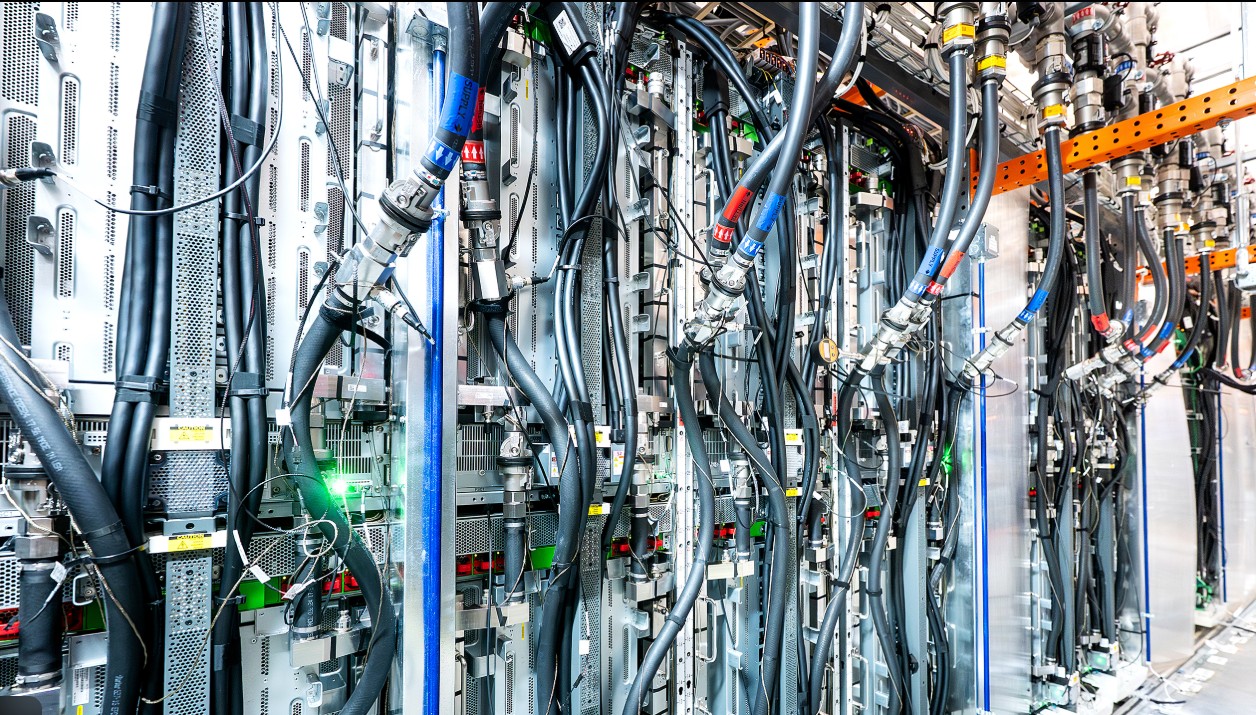
Data Center Cooling Systems
Data Center Cooling Systems Supply and Sourcing for Hyperscale, Enterprise, and Edge Infrastructure
Executive Overview
Data center cooling systems are the mechanical backbone of modern compute environments. They control temperature, humidity, and airflow to maintain stable operating conditions for servers, storage, and networking hardware. Without properly specified and integrated cooling systems, even well-designed electrical infrastructure cannot sustain reliable uptime.
These systems are deployed in hyperscale campuses, enterprise colocation facilities, edge data centers, AI and GPU clusters, financial trading facilities, and mission-critical industrial compute environments. As compute densities increase and rack power levels rise, cooling design has shifted from traditional air-based methods to hybrid and liquid-based architectures.
Supply timing now directly impacts energization schedules. Long lead electrical equipment is no longer the only bottleneck. Cooling infrastructure often drives commissioning dates, especially where modular chillers, liquid cooling, or high-capacity air handlers are required. Procurement teams evaluating data center cooling systems must align mechanical capacity with electrical load projections, building constraints, and deployment sequencing.
Primary stakeholders include:
Procurement teams managing long lead equipment
Mechanical and electrical engineers validating specifications
EPC contractors coordinating installation and integration
Operations teams responsible for uptime
Asset managers evaluating lifecycle cost and replacement strategy
Cooling is no longer secondary infrastructure. It is a core reliability determinant.
Services:
Industry Context and Real-World Constraints
Supply Chain Realities
The market for data center cooling systems has tightened significantly due to:
Rapid AI infrastructure expansion
High-density GPU cluster deployments
Global colocation growth
Edge compute buildouts
Electrification and grid constraints
Certain components such as modular chillers, liquid cooling distribution units, and specialized coils have experienced extended manufacturing timelines. Equipment lead times in the power industry now intersect with mechanical system bottlenecks, creating compound schedule risks.
CRAH units with custom coil configurations and liquid cooling components tied to specific rack densities often carry extended factory queues. Transformer lead time and switchgear supply shortage are well known constraints. Cooling systems now belong in the same long-lead planning category.
Commissioning Pressure
Mechanical commissioning frequently determines whether a white space can pass load bank testing. Delays in cooling system delivery cascade into:
Failed energization windows
Delayed tenant occupancy
Missed interconnection milestones
Increased temporary cooling costs
Data Center Demand Drivers
AI clusters and high-performance compute environments are pushing rack densities beyond 40 kW and in many cases over 80 kW per rack. Traditional air-based CRAC systems cannot support these densities without excessive airflow and energy consumption.
Liquid cooling adoption is accelerating, not as a trend, but as an engineering necessity.
Secondary Market Dynamics
In retrofit environments and urgent replacement programs, redeployment of modular chillers, CRAC units, or CDU systems may be necessary. Secondary market sourcing can mitigate emergency generator procurement style urgency scenarios where uptime exposure exists.
Technical Breakdown by Subcategory
CRAC Units
Computer Room Air Conditioning units are direct expansion systems using refrigerant-based cooling.
Where used
Legacy enterprise data centers
Smaller colocation suites
Edge facilities
Engineering considerations
Refrigerant type compliance
Sensible heat ratio alignment
Humidity control precision
Airflow static pressure compatibility
Specification alignment issues
Oversizing leading to short cycling
Underestimating airflow distribution
Incompatibility with containment systems
Procurement risks
Compressor supply constraints
Refrigerant regulation changes
Custom coil lead times
Operational failure risks
Compressor failure
Condenser inefficiency
Drainage and humidity control malfunction
Replacement challenges
Retrofit often requires footprint matching and duct reconfiguration.
CRAH Units
Computer Room Air Handling units use chilled water rather than refrigerant expansion.
Where used
Hyperscale facilities
Chilled water loop architectures
Large enterprise builds
Engineering considerations
Coil sizing for design delta T
Chilled water supply temperature
Redundancy configuration
Valve control integration
Specification alignment issues
Mismatch between chiller capacity and CRAH coil load
Improper control valve sizing
Procurement risks
Coil manufacturing lead times
Control system interoperability
Operational failure risks
Valve actuator failure
Coil fouling
Pump loop imbalance
Replacement challenges
Requires chilled water shutdown coordination and hydronic rebalancing.
Liquid Cooling
Liquid cooling removes heat directly at the rack or chip level using coolant distribution.
Where used
AI and GPU clusters
High density HPC
Advanced research compute
Engineering considerations
Coolant chemistry compatibility
Leak detection integration
Redundant pumping architecture
Heat rejection interface
Specification alignment issues
Rack manufacturer compatibility
CDU capacity miscalculation
Thermal load forecasting errors
Procurement risks
Limited manufacturer capacity
Custom manifold fabrication lead times
Operational failure risks
Leak exposure
Pump redundancy failure
Coolant degradation
Replacement challenges
Requires careful integration with existing rack layouts.
In Row Cooling
In row cooling units are positioned between server racks to provide localized air cooling.
Where used
High-density row containment
Retrofit density increases
Mixed load facilities
Engineering considerations
Aisle containment alignment
Airflow balance
Proximity to hot spots
Specification alignment issues
Insufficient power allocation
Control integration mismatch
Procurement risks
Limited availability during peak build cycles
Operational failure risks
Localized hot spots if redundancy insufficient
Replacement challenges
Physical space limitations between racks.
Modular Chillers
Packaged chiller systems designed for scalable deployment.
Where used
Campus-style data centers
Rapid deployment projects
Expansion phases
Engineering considerations
N+1 configuration
Ambient temperature range
Cooling tower or dry cooler interface
Specification alignment issues
Undersized for projected IT expansion
Improper glycol mixture specification
Procurement risks
Extended factory build times
Custom voltage configurations
Operational failure risks
Compressor staging failures
Control system firmware incompatibility
Replacement challenges
Crane access and yard space constraints.
RDHx
Rear Door Heat Exchangers attach to server racks to remove heat via liquid interface.
Where used
High density racks
Retrofit high-performance upgrades
Engineering considerations
Structural load on rack
Water pressure management
Leak detection
Specification alignment issues
Incompatibility with existing rack frames
Procurement risks
Custom fabrication timing
Operational failure risks
Gasket degradation
Flow imbalance
Replacement challenges
Downtime coordination at rack level.
CDU Systems
Coolant Distribution Units transfer heat between rack liquid loops and facility water loops.
Where used
Liquid cooled environments
Hybrid cooling facilities
Engineering considerations
Heat exchanger sizing
Pump redundancy
Control integration
Specification alignment issues
Insufficient redundancy planning
Improper heat load modeling
Procurement risks
Long fabrication timelines
Limited production capacity
Operational failure risks
Pump failure
Heat exchanger fouling
Replacement challenges
Requires integration shutdown coordination.
System Integration and Dependencies
Data center cooling systems integrate directly with:
Electrical power systems
Backup generator capacity
Switchgear and UPS infrastructure
Building management systems
Fire suppression systems
Environmental monitoring systems
Improper coordination between mechanical load and electrical redundancy can result in capacity imbalance. Cooling must be aligned with protection systems and control systems to prevent cascading shutdown scenarios.
Cooling power draw must also be modeled in emergency generator procurement planning.
Lifecycle Perspective
Lifecycle planning includes:
Specification development
Vendor prequalification
Lead time forecasting
Factory acceptance testing
Documentation review
Shipping logistics
Rigging coordination
Installation sequencing
Commissioning validation
Ongoing maintenance
Performance trending
Planned replacement
Long lead electrical equipment planning must now include cooling systems as parallel risk categories. Equipment lead times power industry stakeholders are tracking increasingly include modular chillers and liquid cooling equipment.
Secondary market redeployment may mitigate urgent expansion or emergency replacement scenarios.
Procurement Strategy and Risk Mitigation
Effective procurement strategy includes:
Early load projection validation
Spec review against rack density roadmap
Multi-vendor qualification
Control system interoperability checks
FAT scheduling alignment
Spare parts forecasting
Contingency planning for switchgear supply shortage impacts
Alternate sourcing and redeployment options should be evaluated for:
CRAC and CRAH units
Modular chillers
CDU systems
Spec deviation review must be documented prior to purchase order release.
Operational Risks and Failure Modes
Common issues include:
Undersized chilled water loops
Improper airflow modeling
Containment gaps
Control logic misalignment
Inadequate redundancy planning
Deferred maintenance
Aging compressor failure
Commissioning delays often stem from integration mismatches between mechanical and electrical teams.
Who This Page Is For
This page supports:
Utilities supporting data center interconnection
Transmission operators evaluating load impact
Independent power producers hosting hyperscale campuses
Data center developers planning new builds
Industrial facilities deploying on-site compute
EPC contractors managing mechanical and electrical scope
Procurement teams sourcing cooling systems
Asset managers planning lifecycle replacement
Professional Discussion
Jaylan Solutions
www.jaylansolutions.com
Jaylan Solutions supports supply and sourcing of data center cooling systems for grid-connected campuses, colocation builds, AI clusters, and urgent replacement programs. Engagements focus on specification-aligned sourcing, long-lead mitigation, secondary market evaluation, and procurement strategy support across CRAC, CRAH, liquid cooling, modular chillers, RDHx, and CDU systems.
Discussions are centered on technical alignment, lead time exposure, and lifecycle risk planning.
Keywords:
data center cooling systems
CRAC units
CRAH units
liquid cooling data center
in row cooling systems
modular chillers for data centers
rear door heat exchanger RDHx
coolant distribution unit CDU
data center chiller systems
high density data center cooling
hyperscale cooling systems
data center cooling equipment lead times
emergency data center cooling replacement
AI data center liquid cooling
chilled water CRAH units
data center cooling procurement
modular chiller supply
liquid cooling deployment
data center thermal management
data center mechanical infrastructure
