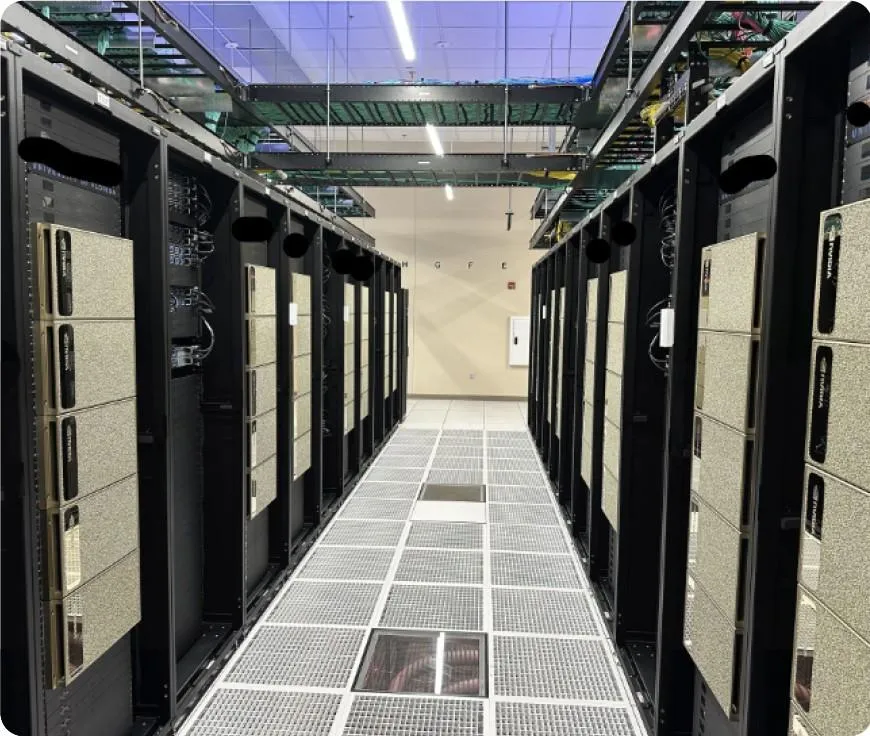
AI GPUs and Components
AI GPUs and Components for Data Center Infrastructure and AI Cluster Deployment
Supply and sourcing of AI GPUs and supporting components for hyperscale data centers, enterprise AI builds, colocation expansions, and urgent capacity augmentation programs.
Executive Overview
AI GPUs and associated platform components are the core compute layer for modern artificial intelligence, high performance computing, and advanced analytics environments. These systems drive large language model training, inference clusters, scientific workloads, digital twins, and real time data processing.
They are deployed in:
• Hyperscale data centers
• Enterprise AI clusters
• Colocation facilities
• Research and government compute environments
• Edge AI installations with centralized aggregation
AI GPU infrastructure is not standalone hardware. It is tightly coupled to power delivery, liquid cooling, high speed networking, rack integration, and facility capacity planning. Procurement timing matters because GPU supply is often constrained, allocation driven, and dependent on coordinated delivery of networking, cooling, and power infrastructure.
Primary stakeholders include:
• Procurement teams managing allocation and supply risk
• Data center engineering teams validating power and thermal density
• Operations teams responsible for uptime
• Asset managers planning phased deployments
• EPC contractors building AI-ready halls
This page addresses technical, procurement, lifecycle, and secondary market considerations for AI GPUs and platform components.
Services:
Industry Context and Real-World Constraints
AI GPU infrastructure currently represents one of the most supply constrained segments of the electrical and data center equipment market.
Key constraints include:
• Long allocation cycles for high-end GPU accelerators
• OEM controlled distribution channels
• Bundled sales models tying GPUs to networking and software
• Rapid product generation turnover
• Power density escalation exceeding legacy data hall design
Lead times for top tier GPU accelerators frequently extend beyond typical server procurement cycles. In parallel, supporting systems such as high power rack PDUs, busbars, rear door heat exchangers, and CDUs face their own supply pressures. In many cases, facility upgrades must occur before GPU hardware can be energized.
Data center demand continues to expand driven by AI model training and inference scaling. This creates compounding constraints:
• Electrical service upgrades
• Switchgear capacity planning
• Transformer capacity coordination
• Liquid cooling retrofits
• High speed fabric network design
Secondary market activity has increased in response to allocation limits. However, compatibility, firmware locking, warranty status, and export controls create significant procurement risk.
Urgent expansion programs must align GPU availability with:
• Power buildout schedules
• Liquid cooling deployment
• Network core expansion
• Rack density limits
Misalignment results in stranded capital or delayed commissioning.
Technical Breakdown by Subcategory
Data Center GPU Accelerators PCIe
PCIe GPU accelerators are card based modules installed in standard server chassis via PCIe slots.
Where used:
• Enterprise AI inference
• Mid density training clusters
• Retrofit deployments in existing rack infrastructure
Engineering considerations:
• PCIe lane bandwidth limits
• Server chassis airflow path
• Slot spacing and power connector configuration
• BIOS and firmware compatibility
Specification alignment issues:
• PCIe generation mismatch
• Power connector amperage limits
• Inadequate chassis cooling
Procurement risks:
• Counterfeit or grey market units
• Firmware region locking
• Incomplete accessory kits
Operational failure risks:
• Thermal throttling due to poor airflow
• PSU overload events
• Driver and hypervisor incompatibility
Replacement challenges:
• Mixed generation cluster inefficiencies
• Platform EOL status
Data Center GPU Accelerators SXM Mezzanine Modules
SXM modules mount directly to baseboards and support high bandwidth interconnects and higher power envelopes.
Where used:
• High density training clusters
• 8-GPU and 4-GPU baseboard systems
• Liquid cooled AI racks
Engineering considerations:
• Direct board level power delivery
• Mechanical retention hardware
• Integrated cold plate compatibility
• NVLink topology mapping
Specification alignment issues:
• Incompatible baseboard revisions
• Thermal interface mismatch
• Inadequate CDU capacity
Procurement risks:
• Allocation tied to full system purchases
• Lack of standalone module availability
Operational failure risks:
• Cooling loop imbalance
• Uneven torque on retention hardware
• Firmware mismatches across nodes
Replacement challenges:
• Board level servicing requirements
• Dependency on OEM tools and procedures
OAM Accelerators in OCP Platforms
Open Accelerator Modules are used in Open Compute style servers.
Where used:
• Hyperscale deployments
• Custom rack scale AI clusters
Engineering considerations:
• Open rack power bus compatibility
• Custom airflow or liquid cooling paths
• Fabric connectivity integration
Specification alignment issues:
• Open rack voltage standard mismatch
• Non standard management interfaces
Procurement risks:
• Limited secondary market liquidity
• OEM ecosystem constraints
Operational failure risks:
• Improper rack power distribution
• Cooling manifold misalignment
Replacement challenges:
• Platform specific integration requirements
8-GPU Platforms and Baseboards HGX Class
These systems integrate multiple GPUs on a shared baseboard with high speed interconnect.
Where used:
• Large model training
• HPC simulation
• AI supercomputing clusters
Engineering considerations:
• Baseboard power plane design
• GPU to GPU interconnect mapping
• Liquid cooling manifold integration
• Rack power density often exceeding 30 to 80 kW per rack
Specification alignment issues:
• CDU undersizing
• Busbar amperage limits
• Rack structural load limits
Procurement risks:
• Long lead times
• Bundled networking requirements
• Firmware controlled feature gating
Operational failure risks:
• Interconnect fabric instability
• Node level imbalance
• Hot spot thermal failures
Replacement challenges:
• Coordinated replacement across nodes to maintain topology symmetry
GPU to GPU Interconnect Fabric NVLink and NVSwitch
High bandwidth fabric connects GPUs within and across nodes.
Where used:
• Intra node communication
• Multi node cluster fabric
Engineering considerations:
• Topology design
• Switch ASIC placement
• Latency optimization
Specification alignment issues:
• Mismatched firmware
• Incompatible bridge revisions
Procurement risks:
• Fabric components not available independently
• Integration limited to specific chassis
Operational failure risks:
• Fabric partitioning
• Reduced throughput due to configuration errors
Replacement challenges:
• Firmware level validation across cluster
Cooling for GPU Platforms
Includes cold plates, manifolds, and CDU interface components.
Where used:
• Direct to chip liquid cooled racks
• High density AI pods
Engineering considerations:
• Flow rate
• Pressure drop
• Leak detection integration
• Redundancy design
Specification alignment issues:
• Mismatched quick disconnect fittings
• Insufficient CDU tonnage
• Inadequate facility water quality control
Procurement risks:
• Custom manifold fabrication lead times
• Incomplete spare kits
Operational failure risks:
• Coolant contamination
• Micro leaks
• Flow imbalance
Replacement challenges:
• Draining and re-commissioning loops
• Downtime coordination
Power Delivery for GPU Platforms
Includes high power PSUs, busbars, and power backplanes.
Where used:
• High density AI racks
• Open rack deployments
Engineering considerations:
• Rack level amperage
• Three phase balancing
• Inrush control
• Harmonic considerations
Specification alignment issues:
• Busbar rating below actual peak load
• PSU redundancy mismatch
Procurement risks:
• Custom backplane fabrication lead times
• Voltage compatibility errors
Operational failure risks:
• Overcurrent events
• Thermal rise in busbars
• PDU breaker nuisance trips
Replacement challenges:
• Hot swap limitations at extreme density
Cluster Networking Adjacencies InfiniBand and High Speed NICs
High speed interconnect hardware bundled with GPU nodes.
Where used:
• Training clusters
• Latency sensitive inference
Engineering considerations:
• Fabric topology
• Switch port density
• Optical module compatibility
Specification alignment issues:
• Mixed speed links
• Incompatible transceivers
Procurement risks:
• Optics supply shortage
• Licensing dependencies
Operational failure risks:
• Fabric congestion
• Misconfigured routing
Replacement challenges:
• Coordinated firmware and driver upgrades
GPU Memory and Module Level Spares
Includes heatsinks, shrouds, and retention hardware.
Where used:
• Field repairs
• Secondary market refurbishments
Engineering considerations:
• Thermal interface materials
• Mechanical tolerance
Specification alignment issues:
• Incorrect torque application
• Improper thermal pad thickness
Procurement risks:
• Non OEM hardware
• Incomplete spare kits
Operational failure risks:
• Localized overheating
• Vibration induced faults
Replacement challenges:
• Skilled technician requirement
System Integration and Dependencies
AI GPU infrastructure directly interacts with:
• Medium voltage and low voltage power distribution
• Switchgear and transformer capacity
• Rack PDUs and busway systems
• Liquid cooling CDUs
• Chilled water or facility water loops
• Fire suppression systems
• Environmental monitoring
• Network core switching
• Time synchronization and cluster orchestration
Electrical and thermal planning must precede hardware delivery. High density GPU racks often exceed traditional data center design assumptions. Integration failures frequently originate in upstream power or cooling constraints rather than GPU hardware defects.
Lifecycle Perspective
Specification
• Power envelope definition
• Thermal load modeling
• Rack density planning
• Network topology validation
Sourcing
• Allocation negotiation
• Bundle validation
• Firmware version confirmation
• Accessory completeness review
Procurement
• Contract review
• Warranty status validation
• Export compliance review
Lead Times
AI GPU platforms currently fall under long lead electrical equipment categories within data center builds. Coordination with switchgear supply shortage and transformer lead time planning is critical when expanding power capacity.
Documentation
• Factory test reports
• Serial number traceability
• Firmware manifests
• Cooling system pressure test records
Delivery Logistics
• Shock monitored transport
• Climate controlled shipping
• Secure chain of custody
Installation
• Rack anchoring
• Busbar torque verification
• Liquid loop pressure testing
• Fabric topology validation
Commissioning
• Burn in testing
• Thermal validation
• Network throughput testing
• Power redundancy failover testing
Maintenance
• Firmware updates
• Coolant sampling
• PSU health checks
Replacement
• Coordinated cluster maintenance windows
• Topology aware GPU replacement
Secondary Market Redeployment
• Cross cluster compatibility validation
• Firmware unlocking verification
• Cooling retrofits for legacy halls
Procurement Strategy and Risk Mitigation
Effective procurement strategy includes:
• Early allocation discussions
• Spec validation against facility limits
• Parallel sourcing for networking and cooling
• Secondary market review for gap mitigation
• Serial number verification
• Warranty transfer confirmation
Risk mitigation measures:
• Cross generation compatibility mapping
• Redundant supply chain channels
• Pre shipment inspection
• Firmware consistency audits
• Interoperability validation before rack energization
Alternate sourcing must consider not only hardware availability but integration risk, cooling compatibility, and firmware governance.
Operational Risks and Failure Modes
Common failure patterns include:
• Underestimated rack power density
• Inadequate cooling flow rates
• Mixed GPU generations in tightly coupled clusters
• Fabric misconfiguration
• Insufficient busbar capacity
• Improper torque on high current connections
• Delayed commissioning due to missing accessory components
Aging infrastructure risks arise when legacy data halls attempt to host high density AI clusters without electrical upgrades.
Commissioning delays often stem from incomplete integration planning rather than hardware defects.
Who This Page Is For
This page supports:
• Utilities expanding power to AI campuses
• Transmission operators planning substation upgrades for data center interconnection
• Independent power producers supplying AI driven load growth
• Data center developers building high density AI halls
• Industrial facilities deploying private AI clusters
• EPC contractors responsible for electrical and mechanical integration
• Procurement teams managing allocation and risk
• Asset managers planning phased compute deployment
Professional Call to Action
AI GPU infrastructure is no longer simple server procurement. It is coordinated electrical, thermal, networking, and allocation planning.
Jaylan Solutions
www.jaylansolutions.com
Provides specification aligned sourcing support, long lead mitigation strategy, secondary market evaluation, and coordinated supply planning for AI GPU platforms and associated infrastructure.
Engage early when planning high density AI deployments to reduce supply risk and integration exposure.
Keywords:
AI GPUs for data center
Data center GPU accelerators
SXM GPU modules
PCIe GPU accelerators
HGX 8 GPU platform
GPU cluster hardware
AI training GPUs
NVLink interconnect
NVSwitch fabric
Data center liquid cooling for GPUs
GPU cold plate cooling
High density GPU rack power
InfiniBand for AI cluster
AI server networking
GPU server power supply
AI cluster deployment
GPU allocation shortage
AI data center buildout
High performance computing GPUs
Enterprise AI infrastructure
